
Switchgear ordered after groundbreaking arrives after the building. That one sentence explains most schedule overruns on equipment-heavy projects, and it is why we treat long-lead procurement as its own service rather than a line item in a purchasing log. The items that take longest to deliver are rarely the ones that take longest to install, and the order in which they are bought sets the date the owner moves in.
We identify long-lead equipment during preconstruction, release early procurement packages ahead of the full construction contract when the owner agrees, and track every submittal, approval, fabrication slot and delivery through to the loading dock. The list varies by project: electrical gear, generators, transformers, rooftop units, chillers, structural steel, elevators, specialty glass, overhead doors, process equipment and anything that is built to order.
On a typical Oklahoma project the owner thinks about the building first and the equipment second. We reverse that order, because the equipment drives the building's dates.
We sort equipment by lead time and by risk. Items with long fabrication times and no easy substitute, such as large transformers, main switchgear and custom process equipment, go on the first list. Items with moderate lead times but big schedule effects, such as rooftop units and elevators, go on the second. Everything else follows the normal bid cycle.
A look at what Oklahoma owners are building shows why that sorting matters. The Army reported a March 24, 2026 groundbreaking for a $74 million Ammunition Demolition Shop at McAlester Army Ammunition Plant, with two process buildings and a separate control building. A project of that kind depends on specialized process systems that are made for it, not pulled from a warehouse shelf. The same is true, on a different scale, for a manufacturing line or a data hall.
We build the procurement schedule backward. If the owner needs power on a certain date, the switchgear must be on site, set and tested some weeks earlier, shop drawings approved some weeks before that and the order placed before that. We write each of those steps into the master schedule with named responsibility, so that a late submittal is visible the week it is late, not the week the crane is waiting.
Delivery windows also need attention. Large equipment travels on permitted loads, needs a clear route and a crane or heavy forklift at the site, and often can only be set once. We confirm access roads, laydown areas and rigging plans before a shipment leaves the factory. A transformer that arrives before its pad is poured is a very expensive piece of yard art.
Procurement is paperwork before it is steel and copper. We prepare a submittal register at the start, push the design team for fast reviews on critical items and keep a running log of status. When a submittal comes back with comments, we review the response against the schedule and tell the owner if the date has moved.
We also manage the details that cause trouble later: payment terms for deposits, stored material insurance, off-site storage and the tests a manufacturer performs at the factory. Where possible we negotiate price holds so that an order placed in preconstruction is not repriced at award. For owners who want to see the plan, our preconstruction estimating work includes a procurement list with lead times and price risk.
Equipment pricing can move between design and purchase. Steel, copper and electrical gear have all seen large swings in recent years, and a number from a bid may not hold for months. Owners who buy early can fix the price, though they take on storage and coordination duties. We lay out the trade-off clearly so that the decision is an informed one.
Early buyout also changes the cost conversation with the design team. When we release a package of equipment ahead of the main contract, the engineer must freeze the design of that package, and changes after the order are costly. We encourage owners to settle equipment selection first, then finish the building design around it, which tends to cost less than the reverse.
Government and public-sector owners often face long procurement cycles of their own, with sealed bidding, bid security and award timelines that can add weeks. Where the delivery schedule is tight, we help structure the bid packages so critical equipment can be pre-purchased or so that the winning contractor can order immediately after award.
Manufacturers and data center developers face a similar pattern. In Muskogee, the state commerce department announced a $27 million expansion in January 2022 with 80 new jobs, including a new manufacturing plant. Plants like that rely on production equipment with long delivery times, so the building often has to be ready on the day the machine arrives. A manufacturing facility is a good example of work where procurement drives the critical path.
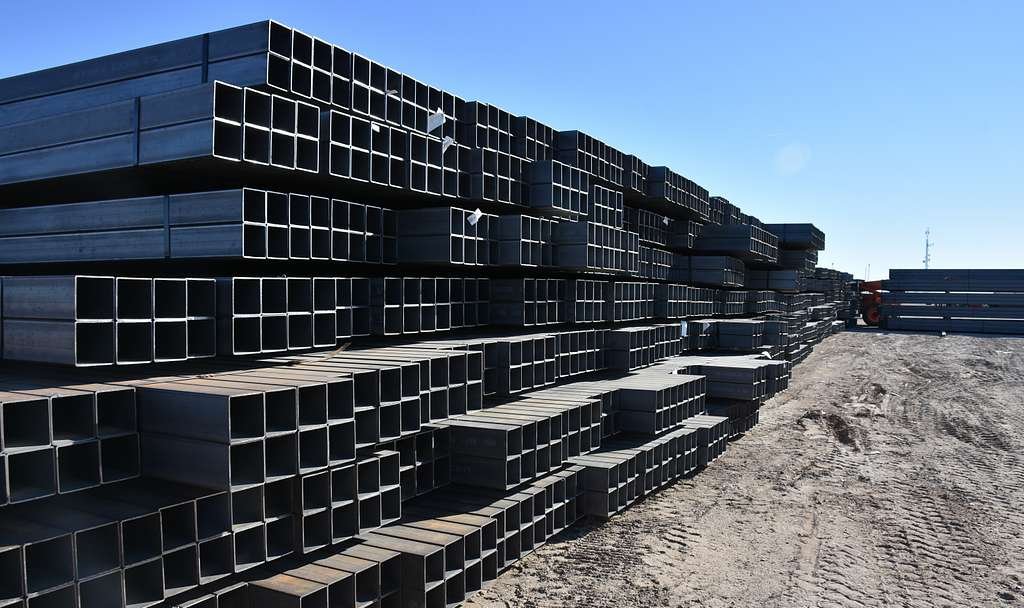
Early ordering shows up in most of our larger projects. On data center construction, generators, switchgear and cooling plant are the pacing items. In structural work, steel erection depends on mill orders and detailing time. For tall or large-span buildings, joists, decking and metal panels all have lead times that need to be set at the start.
Wikipedia reports that on February 3, 2026 the Sand Springs city council approved a data center project on 827 acres of annexed land about eight miles north of downtown, with construction planned to start in 2027 and finish by 2029, and the same kind of long-horizon schedule applies to any large project in Sand Springs or near McAlester. When the start date is a year away, the first purchase decisions come well before the first shovel.
Send us the equipment list and the date you need to be operating. We will return a procurement schedule with order dates, approval deadlines and delivery risks.
FAQ
Send the property, the building type and the schedule. We review the scope, the approvals and the trade packages and explain how the project would be sequenced.