
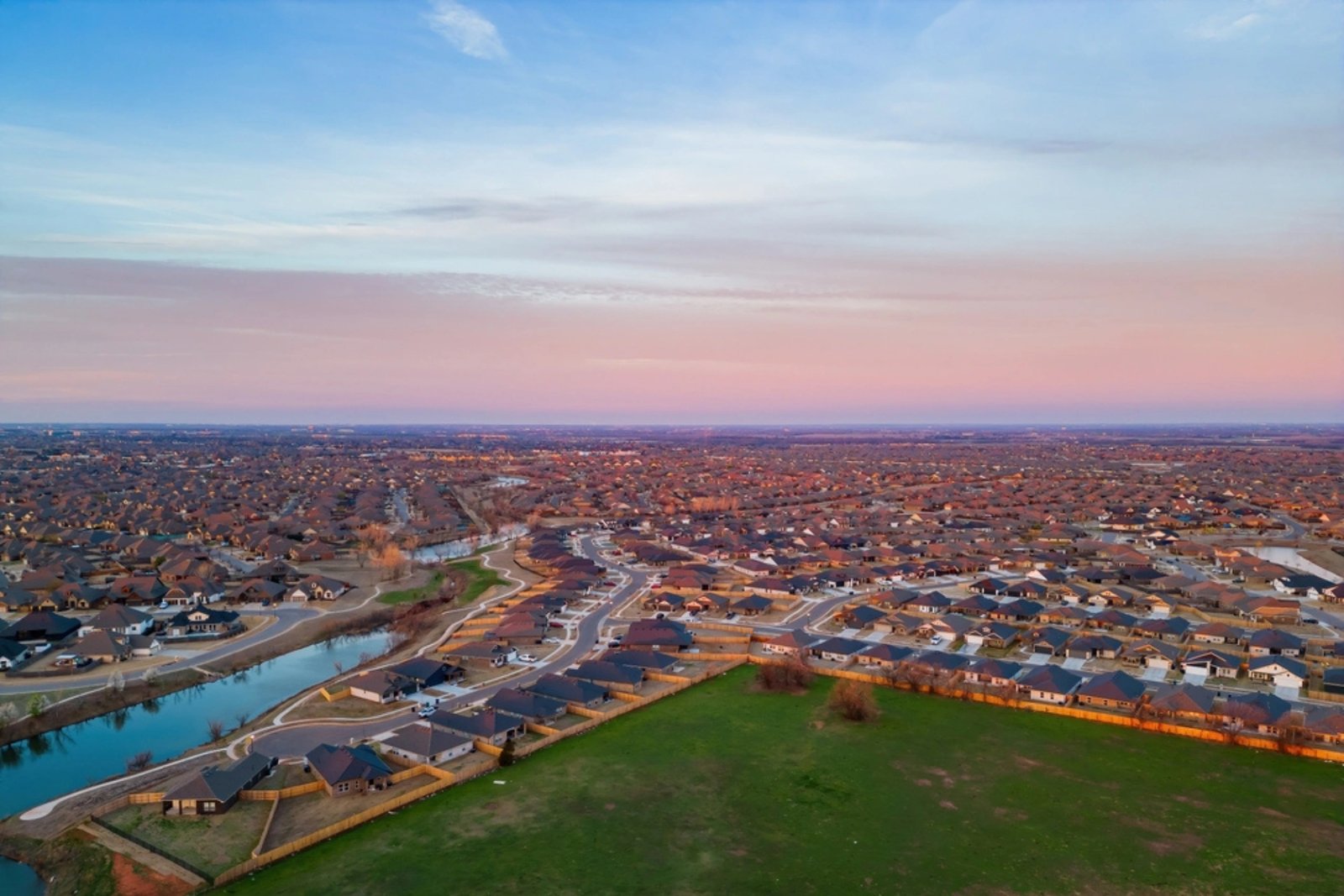
Manufacturers in southwest Oklahoma expand in steps, and each step has to fit around a running line, so we build Lawton expansions in phases that protect production. We build plant additions, warehouses, offices, clinics, retail and municipal buildings in Comanche County, with equipment foundations, heavy slabs and utility tie-ins managed to the plant's shutdown calendar.
A report on an April 2021 groundbreaking describes Goodyear's Lawton plant as building a new $50 million expansion that includes a 45,000 square-foot building for an advanced mixer, and calls Goodyear the largest employer in Comanche County with approximately 2,900 people, including contractors. We cite it as local market context and make no claim of work for that company. It tells us that industrial owners here reinvest in existing plants and that the supply chain around them needs warehouses, shops and offices.
The result is a market with steady demand for practical buildings and little patience for schedule slips. We aim to be the kind of builder who gives an owner a real date and then keeps it.
An advanced mixer, a press line or a conveyor system is only as stable as the foundation beneath it. We build isolated pads, thickened slabs, pits and trenches to the equipment vendor's loads and tolerances, set embedded plates and sleeves to the vendor's drawings and verify elevations before concrete is poured. Our concrete foundations trade partners work from those drawings under our supervision, and vibration-sensitive equipment gets isolation details where specified.
Floors take the second beating. Forklift aisles and loading docks need joint layout and surface hardness suited to hard wheels, while production areas may need chemical resistance or special finishes. We discuss floor design with the owner's operations people, since they know where the abuse is greatest, and we match the mix and finish to the real use.
Quality control is documented. We test concrete at the placement, record slump, temperature and cylinder results, scan slabs where reinforcing or conduit must be located and measure flatness when the equipment demands it. The owner receives those records at closeout, which is useful when a vendor asks to see proof that a pad meets its tolerance.
Expansion budgets depend on tie-ins. Connecting new construction to an existing plant means shutdowns for power, water, compressed air and process lines, and those steps can control the whole schedule. We map the tie-ins at the start, ask the owner which shutdown windows are available and price overtime or weekend work where needed.
Demolition and relocation can also add cost. If a new addition requires moving an old dock, tank or substation, we include that work. Lawton owners who are comparing a new plant addition with a separate building in Fort Sill or Duncan can ask us to price each, and we show the differences in site, utilities and logistics.
Procurement is the last big cost driver. Steel, switchgear, process piping and specialty doors can quote differently from week to week, so we ask vendors for validity periods and lock in prices at the earliest sensible point. When a number depends on a market that is moving, we say so and show the range instead of hiding it in a single figure.
Our approach to occupied sites starts with safety and access. We build separate construction entrances, mark haul routes, fence work zones and brief crews on plant rules. We deliver materials at times that avoid shift changes, and we use clean-up and dust control to protect equipment and product.
The second part is communication. We hold weekly meetings with plant operations and maintenance, share a three-week lookahead and give advance notice of utility outages. Phased construction on occupied sites is not a special program for us but an ordinary way of working, since most expansion projects involve it.
Besides manufacturing, Lawton supports regional healthcare, retail, education and municipal buildings. Healthcare owners need infection control, medical gas, imaging shielding and strict mechanical requirements. Education institutions schedule work around academic terms. City and county owners bid work publicly and expect clear records.
Lawton is primarily served by Interstate 44, designated as the H. E. Bailey Turnpike, and US 62 connects Lawton to Altus to the west, according to Wikipedia. Lawton-Fort Sill Regional Airport has a single runway, 17/35, listed by the Oklahoma Aerospace Commission at 8,599 ft long and 150 ft wide with a concrete surface and an ILS approach. Those links matter for delivery and for visiting engineers, vendors and inspectors.
The National Weather Service Norman office lists an F3 tornado on April 10, 1979 in Lawton that killed 3 people and injured 100. History like that argues for storm planning on every project, not just those that must be hardened. We discuss shelter rooms, roof attachment, structural bracing for large doors and the placement of outdoor equipment as part of design.
In a plant, shelter also means getting shift workers to safe areas quickly. We help owners identify interior spaces with strong walls and roofs, assess where people could shelter and add reinforced rooms where the budget allows. For clinics, we focus on keeping patients protected and critical systems running after a storm. Backup power, protected fuel storage and elevated or sheltered equipment pads keep a clinic or a control room working when the grid is down, and we price these items as a package so owners can compare.
Tell us what you are adding, which systems must stay running and when you need it done. We will return a scope, a budget range and a phased schedule.
FAQ
Send the property, the building type and the schedule. We review the scope, the approvals and the trade packages and explain how the project would be sequenced.