
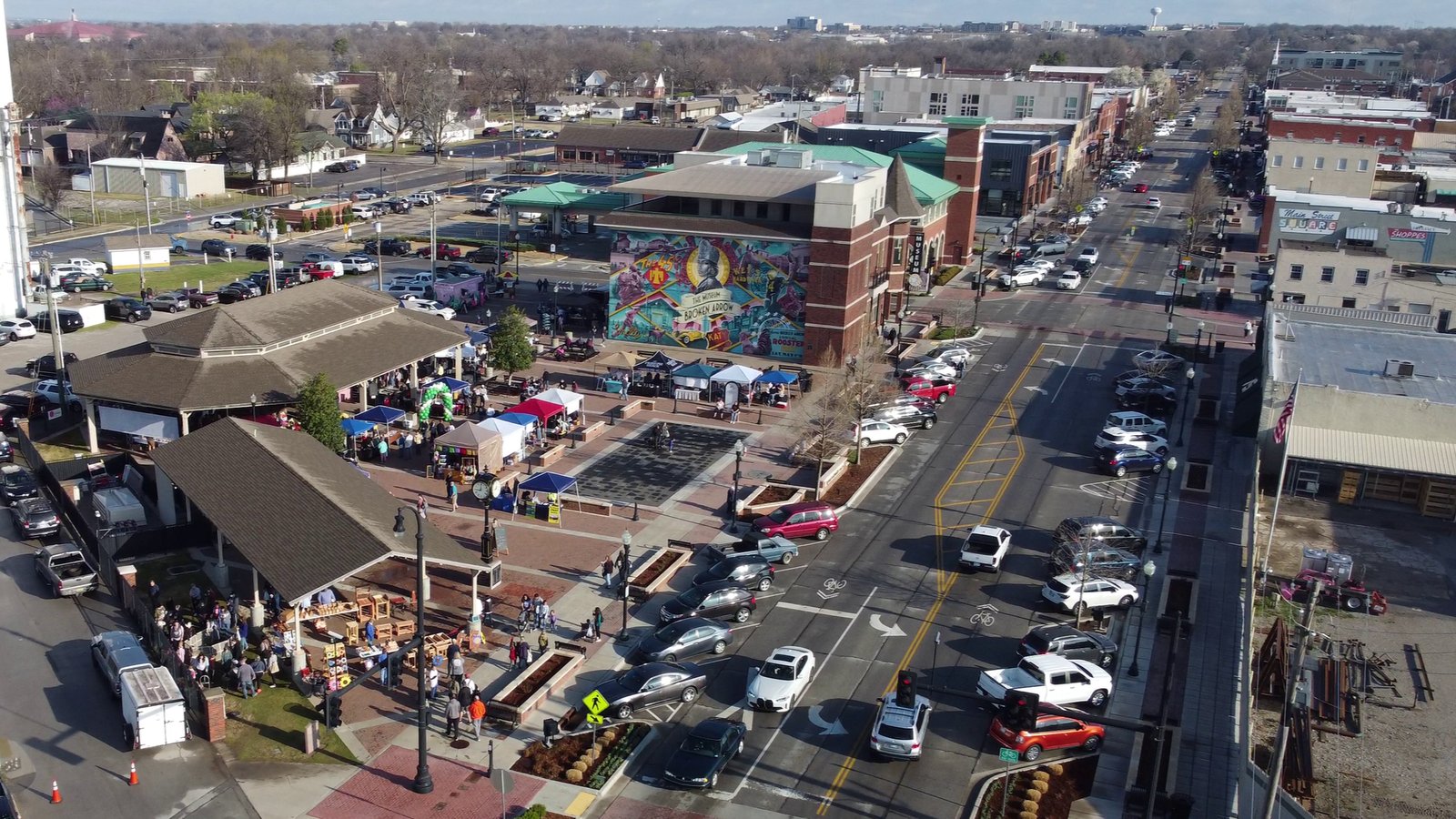
Manufacturers who want to expand east of Tulsa usually ask the same question: which piece of ground, and who will build on it without losing a quarter to permitting and site work. We construct plants, light-industrial buildings, warehouses and supporting offices in Broken Arrow, with a plain focus on utilities, truck access and slabs that carry equipment.
Two business-park sites make the case. The Broken Arrow Economic Development Corporation lists Creek 51 Business Park as 85 acres at the southwest corner of the Creek Turnpike and Highway 51 in Wagoner County, zoned industrial, and Jackson Mills as 52 acres at the intersection of Highway 51 and the Creek Turnpike, also in Wagoner County, described as located along the Highway 51 industrial corridor. Both put a building within a short drive of two high-capacity roads.
We lay out below how we handle trade supervision, jurisdiction, highway access and schedule on projects like these, plus the questions we hear from plant managers and real estate teams.
A plant is only as good as its floor and its truck court. We schedule, supervise and inspect the slab, the equipment pads and the heavy-duty paving, which lets us control thickness, reinforcement and curing from start to finish. For a production building we usually specify a jointed slab with a hardened surface and plan equipment foundations in advance of the floor pour.
Sitework gets the same attention. On an open 50 or 85-acre parcel, early grading sets the drainage pattern for every later phase. We design the site so phase two can be built without tearing up phase one, and we leave utility stubs and conduit sleeves where the next building will need them. Truck courts and dock aprons are built with the concrete thickness, joint spacing and subgrade preparation that heavy trailers require.
The Broken Arrow Expressway, State Highway 51, opened in 1964 and was officially named the Broken Arrow Expressway on July 6, 1999. The Creek Turnpike, SH-364, is a 33.22-mile partial beltway operated by the Oklahoma Turnpike Authority, with interchanges with SH-51 and the Muskogee Turnpike near Broken Arrow. Between them, these roads bring raw material in and finished goods out without forcing trucks through the middle of town.
That geography matters during construction as well. Concrete, steel and equipment arrive on the same roads, and we choose staging areas that keep trucks out of residential streets. Compared with a site in Tulsa, a Broken Arrow parcel can provide easier truck movement but may require longer utility extensions, which we price carefully.
Several of the industrial parcels near the Creek Turnpike and Highway 51 are in Wagoner County rather than inside the older part of the city. That can change which office issues the permit, which fire authority reviews the plans and which utility provides water, sewer and power. We settle those questions during feasibility and put the answers in a single memo.
The state minimum codes apply everywhere, but cities and counties adopt editions on their own schedules, and each project follows the codes the local authority adopts and enforces. We confirm the edition and amendments with the reviewing office. Oklahoma does not license general contractors, so owners should verify that the electrical, mechanical and plumbing trades on a permit hold their required licenses, and we do that for every job.
Wikipedia states that Broken Arrow has the third-largest concentration of manufacturers in Oklahoma, a claim we treat as a general indication rather than a precise ranking. What we see on the ground is a mix of metal fabricators, aerospace suppliers, electronics assemblers and food and consumer-goods producers who need buildings with high bays, process utilities and good truck access.
Our manufacturing industry experience covers wide-bay shells, crane-ready steel frames and clean assembly rooms. When a manufacturer also needs offices or a customer-facing showroom, we combine those into one permit and one schedule, which keeps the move-in date firm.
On acreage, the sequence matters as much as the cost. We build roads, utilities and detention first, then the pad, then the structure, so that each trade can work in a clean, accessible area. If a manufacturer needs a first building now and a second in two years, we size shared systems for both and install the full site development and utilities infrastructure up front. Owners who also look north at Owasso can compare the two corridors on the same basis.
For buildings with large equipment, we coordinate the delivery dates of machines with the building schedule, because equipment cannot always wait for a perfect finish. A flex light industrial building can also be built first and fitted out later, when a tenant is signed, which reduces the owner's carrying cost.
Technical employers raise the bar on clean construction, tight tolerances and records. Wikipedia reports that FlightSafety International has over 675 employees in Broken Arrow, about half of them engineers. Buildings for similar technical tenants require quiet mechanical systems, stable power and rooms sized for specialized test or training equipment. Our manufacturing plant projects follow the same discipline.
We coordinate with the tenant's engineers on floor vibration limits, clear heights and utility loads before we finalize a design. A pre-construction meeting with the electrical utility is usually essential, because large loads can require new service lines, and the lead times can run several months.
Send us the acreage, the process and your equipment list. We will check access and utilities, define the permit path and return a phased plan and budget.
FAQ
Send the property, the building type and the schedule. We review the scope, the approvals and the trade packages and explain how the project would be sequenced.