
A $1 billion data center campus in east Tulsa and an outlet mall beside the Creek Turnpike in Jenks do not have much in common, except that both started as a developer's pro forma and both lived or died by the construction number behind it. Commercial real estate developers in Oklahoma work in a state where one project sits on a metro corridor with a full plan review staff and the next sits on a county road with a part-time building official. We build for owners on both ends of that range, and we try to tell a developer which kind of site they actually have before the lender's appraisal does.
Developers hire a general contractor to protect three things: the basis, the delivery date and the lease-up. If the number moves after the loan closes, the equity absorbs it. If the date slips past a tenant's rent commencement, the carry grows. If the building arrives with the wrong clear height, dock count or parking ratio, the leasing team spends months explaining it. Our work for this buyer is mostly about making those risks visible early, while changes are still cheap, and holding to the numbers once the pricing is final.
We are a statewide general contractor, so we keep working relationships in more than one market. That matters to a developer who owns a spec building in one corner of the state and has a land option in another and wants one construction team to compare both with the same method.
Announcements tell you where tenant demand is moving. Meta announced a $1 billion, 2-million-square-foot data center at the 2,000-acre Fair Oaks innovation park in east Tulsa, with more than 1,000 construction jobs at peak, and a separate campus north of the city was described by the Tulsa Regional Chamber as a multi-phase investment reaching $3 billion. Those are mission-critical projects, but they pull labor, ready-mix and electrical gear toward the Tulsa area, and that affects the price of a retail pad or a flex building within driving distance.
Retail and mixed-use developers face a different map. Tulsa Premium Outlets, just south of the Creek Turnpike near the Oklahoma Aquarium, resumed construction in 2023 with plans for almost 100 shops, which shows that large destination retail still finds financing when the interchange and visitor draw are strong. Developers evaluating a similar site should ask what the highway department has scheduled nearby, because a ramp closure can change a grand opening date more than any weather delay. For light industrial and office users, our flex and light industrial work and the commercial construction we manage let us compare shell cost, tenant finish allowance and site cost on one sheet.
The first lever is the site. A pad that looks cheap per acre but needs a lift station, a turn lane and a 600-foot water extension can cost more than a pricier parcel with utilities at the lot line. We price the site separately from the building so that a land trade is an informed one, and our site development and utilities scope is where most of those surprises show up before closing instead of after.
The second lever is the tenant. A developer who builds a warm shell and then negotiates a tenant improvement allowance is carrying two budgets, and the gap between them is where disputes happen. We separate base building work from tenant work in the estimate, tie each to a drawing set, and keep allowances honest, which helps when a lead tenant's design team changes the plan after permit submission. For build-to-suit or reuse projects, tenant improvements and renovation and adaptive reuse carry different risks than ground-up work, and we price them with their own contingency instead of borrowing the new-build number.
The third lever is escalation. Switchgear, rooftop units, storefront and structural steel can be the long-lead items that decide whether a certificate of occupancy arrives before the lease commences. Locking the lead time early, even if the price is not final, protects the schedule more than shaving a percentage point at bid.
Oklahoma has statewide minimum codes, but the edition on your desk depends on the city. Edmond ties the codes that apply to the permit application date, while the state sets its own minimum codes. A project that files during a code update can end up in a conversation about which edition governs, and developers should resolve that with the building department at the start of design, not at plan review.
The state also does not license general contractors, though trade licenses apply to electrical, mechanical, plumbing and roofing. That means a developer's protection comes from the contractor's contracts, bonds, insurance and references rather than a state credential, so we put those items in front of an owner's counsel during selection. We confirm adopted editions, local amendments and fire marshal expectations in writing, and we build the permit timeline into the schedule instead of treating it as a hidden float.
A developer's schedule has hard edges: a loan maturity, a tenant's seasonal opening, a retail center that needs to catch holiday traffic. We work backward from the date that costs money. For a spec building, that is usually the time at which a prospect can walk a finished space. For a build-to-suit, it is the tenant's rent commencement. We then sequence earthwork, foundations, structure and enclosure so that the long-lead items and inspections do not collide.
Weather is part of the plan. The National Weather Service Norman office's tornado table lists 4,518 tornadoes in Oklahoma from 1950 onward, with May as the peak month, and that is also the month when a lot of sitework and foundations are scheduled. We stage materials, protect open excavations and sequence roof dry-in so that a storm costs days, not weeks. Highway work matters too: ODOT's Tulsa advisory lists an I-44 and US-75 interchange project with closures continuing through summer 2028, which affects deliveries and tenant access to anything nearby.
We begin with a feasibility pass: massing, site, utilities, entitlement path and an order-of-magnitude budget. If the numbers fail, it is better to learn that before design fees. If they pass, we move into preconstruction estimating and, where the owner wants one team accountable for design and construction, design and build delivery.
During construction we report the same way every week: cost to date, forecast to complete, change orders pending, schedule float and open items for the lender's inspector. Developers who hold property after completion should also see how we serve property management firms, which is the buyer who inherits the building.
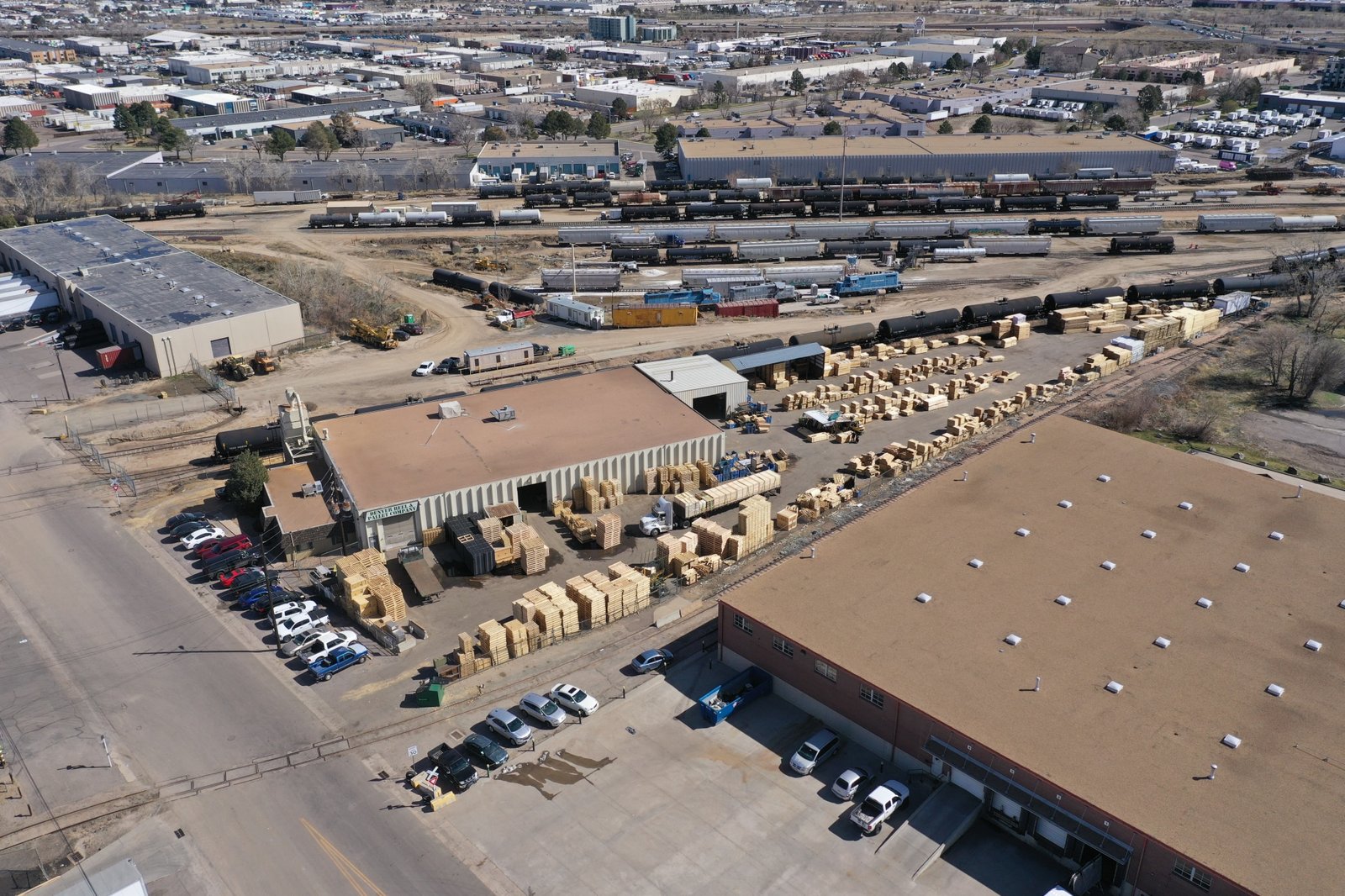
Many of our developer clients combine a shell with other scopes. Multi-building parks often need parking and paving packages, so we coordinate parking lot construction with the building schedule. Housing partners may pair retail frontage with a residential phase, and our work for multifamily developers shows how those programs share utilities and construction access. For distribution parks, the conversation often turns toward logistics and distribution users and the dock, truck court and trailer parking they require before they sign.
Send us the survey, a concept plan and the lease dates you are working against. We will tell you what the site and building are likely to cost and what has to happen before closing.
FAQ
Send the property, the building type and the schedule. We review the scope, the approvals and the trade packages and explain how the project would be sequenced.