
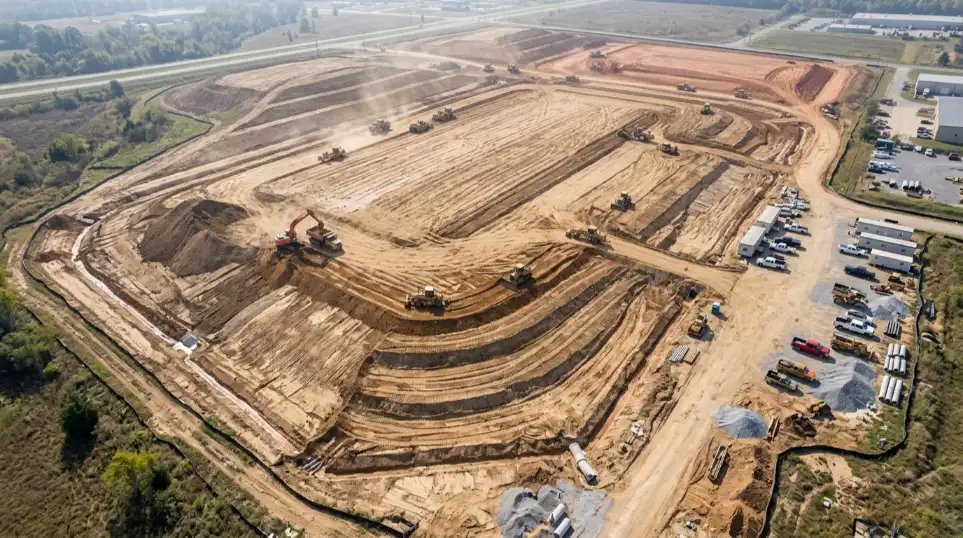
An estimate is only as good as the code year and the site facts behind it. In Oklahoma those facts shift more than owners expect. The Uniform Building Code Commission sets statewide minimum codes, yet each city building inspector's notice lists the codes that city adopts and enforces for every project in town. A project priced in one month under one set of rules can be permitted the next under another.
Preconstruction is how we keep an owner ahead of those moves. It covers the budget, the schedule, the constructability review, the bid strategy and the early purchasing that happen before a shovel enters the ground. We do this work for private owners, developers and public agencies, and we do it whether or not we end up building the project. The sections below describe what we deliver at each stage, how we price, and what we ask owners to decide early.
A good estimate begins with a conversation. We ask what the building must do, who will occupy it, when it must open and how much money is truly available. We ask about the site: has a geotechnical report been done, where are the utilities, is there a floodplain, and who owns the neighboring land? Many budgets fail because an assumption about one of those items was wrong from the start.
We also ask who will review the plans. A metro permit office and a small-town building department work differently, and a county road is not a city street. The Oklahoma Construction Industries Board does not license general contractors, so owners cannot rely on a state license as a screen, and we encourage them to ask about trade licenses, bonding and references from any builder they consider. We bring answers to those questions into the estimate itself.
We build estimates from quantities, not from a price per square foot alone. Takeoffs cover concrete, steel, framing, envelope, roofing, finishes, mechanical, electrical, plumbing, sitework and general conditions. Subcontractor and supplier quotes fill the specialty scopes, and we leave a visible allowance for items still undefined. The estimate lists assumptions and exclusions in plain language so the owner can see what is included.
We present the estimate at several stages: concept, schematic design, design development and final documents. Each stage shows how the number has moved and why. If the design adds cost, we tell the owner and offer options. Our work on design-build delivery projects uses the same process, with the design team in the room during pricing.
We keep a working list of what each jurisdiction enforces. The state adopted a new package of codes, and local governments adopt them on their own schedule. In Sapulpa, the building inspector's notice lists the International Building Code and the National Electrical Code the city adopts and enforces. The Oklahoma Uniform Building Code Commission also sets the statewide electrical code minimum.
Those codes matter for pricing. A change of edition can alter energy requirements, egress, fire protection and structural design values, and it can shift cost by several percent. We ask the plan reviewer which edition applies, list permit and impact fees separately, and tell owners when a project may straddle a change. For public work, the estimate also follows the bidding rules that govern the agency.
Value engineering is better done early than late. We look at structure, enclosure, mechanical systems and site layout for savings that do not reduce quality, and we present options with prices. Sometimes the best savings come from simplifying the building shape or repeating a detail, which cost little in design time. Sometimes the answer is to phase the work.
Escalation and contingency deserve honest treatment. Steel, concrete and electrical gear change price quickly, so we carry an escalation line and update it. Contingency is held for unknowns, and we explain how it will be spent. Owners who see these lines understand that the number is a range that narrows as design progresses.
We build a preliminary schedule at the same time as the estimate, because time and money are linked. The schedule shows design, permit, procurement, construction and closeout, with the long-lead items marked. Switchgear, roofing, elevators, steel and specialty equipment can take months, and ordering late costs more than ordering early. Our page on long-lead procurement describes how we do this.
The Oklahoma Turnpike Authority board approved a $39.2 million contract in September 2024 for the second phase of the Stroud service plaza project, which widens the turnpike to six lanes west of town. Large public jobs like that compete for subcontractors and materials in the same region, and we watch the regional workload when we plan a bid. A busy season can lengthen quotes and raise prices, so timing matters.
Preconstruction supports every delivery method. For a conventional bid, we help prepare the documents and review bids. For a negotiated approach, we build a guaranteed maximum price. For a construction manager approach, we describe our process on the construction manager at risk page. Each method has strengths, and we explain them for the owner's specific project.
Owners also need entitlement help, such as zoning, platting and utility agreements, which we can coordinate with the owner's team. A commercial real estate developer often engages us at the land stage to test several sites, and we welcome that early role.
Send us your drawings or a project brief, and we will return a budget range, schedule outline and a list of open questions. We estimate work in cities and towns across Oklahoma.
FAQ
Send the property, the building type and the schedule. We review the scope, the approvals and the trade packages and explain how the project would be sequenced.