
Eleven new buildings costing $210 million went up for the Air Defense Artillery School campus at Fort Sill after the base realignment process ordered the school moved there in 2005, with total realignment spending at the post just over $417 million, according to an April 2009 report. Nobody delivers a program like that by finishing every drawing first and then asking for bids. The design and the construction have to move together, or the opening date slips.
That is the reason owners choose design-build: one contract, one team, one number that is refined as the design develops. We run design-build projects for private owners, tribal enterprises, agencies and developers across Oklahoma, working with architects and engineers who join us on the team. The sections below describe how the approach works, when it is a good fit, and where an owner should be careful.
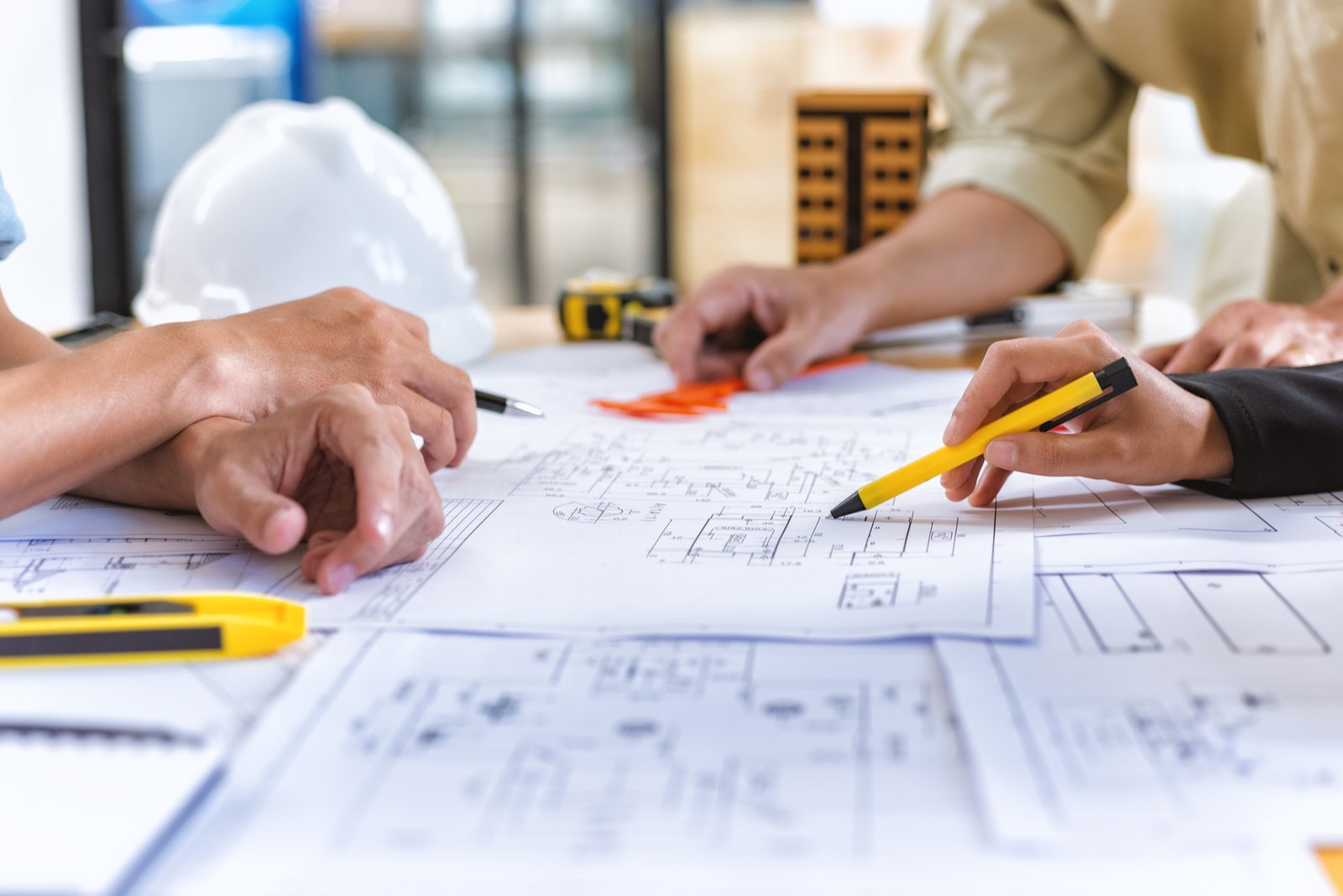
The owner signs one agreement with us, and we engage the design professionals as part of our team. Early on, we gather the program, the site information and the budget, then develop a concept and a price together. As the design advances, we update the price and give the owner a chance to adjust scope before the numbers are locked. Once the design reaches an agreed point, the price becomes a guaranteed maximum or a lump sum, and construction starts, often before the last drawings are complete.
That overlap is where the schedule gain comes from. Foundations can start while interior design is finishing, and long-lead equipment can be ordered as soon as the design for it is stable. The owner sees one team making the tradeoffs between design intent, cost and schedule, instead of a design team and a builder working at arm's length. We hold regular design reviews with the owner so the building stays true to their needs.
Pricing during design is where owners feel the difference. Instead of waiting for a finished set to learn the cost, they see a number at each milestone and can trade scope against budget while changes are still cheap. If a wall type, a roof system or a mechanical approach pushes the number up, we show the alternative next to it and let the owner choose.
Tribal governments and their enterprises often prefer speed and single-point responsibility. The Citizen Potawatomi Nation's 45,000-square-foot plant, the first tenant of the 700-acre Iron Horse Industrial Park in Shawnee, is an example of a tribal owner developing industrial space for its own business, and the same nation is the largest employer in Pottawatomie County. Private manufacturers, developers and logistics operators also like the approach, particularly when a market opening or a lease date drives the schedule.
Public agencies may be limited by procurement rules, since Oklahoma's Public Competitive Bidding Act of 1974 requires competitive sealed bidding for public construction contracts over $100,000. We help public owners understand which delivery methods their statute allows and where a different approach is permitted. For private work, there is more flexibility. Our work for government and public sector owners follows the rules the owner's attorney confirms.
Oklahoma does not license general contractors at the state level, but design professionals must be licensed, and the trades we use must hold their own licenses. In a design-build contract, the design professionals are our team members, and the contract states who is responsible for what. We encourage owners to have an attorney review the agreement and to ask about professional liability coverage and the process for resolving disputes.
Code review is part of design. The state sets minimum codes, and cities adopt and enforce their own codes on their own timelines. We check the applicable edition and the plan review process at the start, and we involve the building department early where we can. For accessible design on public buildings, the state requires compliance with codes adopted by the State Fire Marshal under 61 O.S. section 11, and we build that into the program.
Design-build shortens the schedule only if the owner decides on time. We build a decision calendar that lists what the owner must approve and by when: program, site, concept, materials, systems and equipment. Late decisions are the most common cause of delay, and the calendar keeps them visible. When a decision slips, we say what it affects and by how many days.
Aerospace and industrial programs are good examples. A $65 million advanced composite materials facility planned on 18 acres in the North Development Area of Tulsa International Airport is anticipated for completion in 2028, and owners with plans like that usually need a team that can start site work while the process design settles. For such owners, our preconstruction estimating work gives early price feedback as the design develops.
Design-build is not always the best choice. If the owner has a complete, well-coordinated set of drawings and wants the lowest price from competitive bids, a conventional bid may serve better. If the owner wants a high degree of independent oversight of the design, a different structure with a separate architect may be preferable. If the program is unclear, design-build can drift unless the owner sets firm criteria.
We tell owners honestly which method fits. Some choose a construction manager approach, which we describe under construction manager at risk. Others want a hybrid: design-build for the shell and site and a separate fit-out. A manufacturing facility with complex process equipment, for example, may suit a staged approach.
Tell us the program, site and opening date, and we will explain whether design-build, bid or another approach fits best. We work with owners across Oklahoma.
FAQ
Send the property, the building type and the schedule. We review the scope, the approvals and the trade packages and explain how the project would be sequenced.