
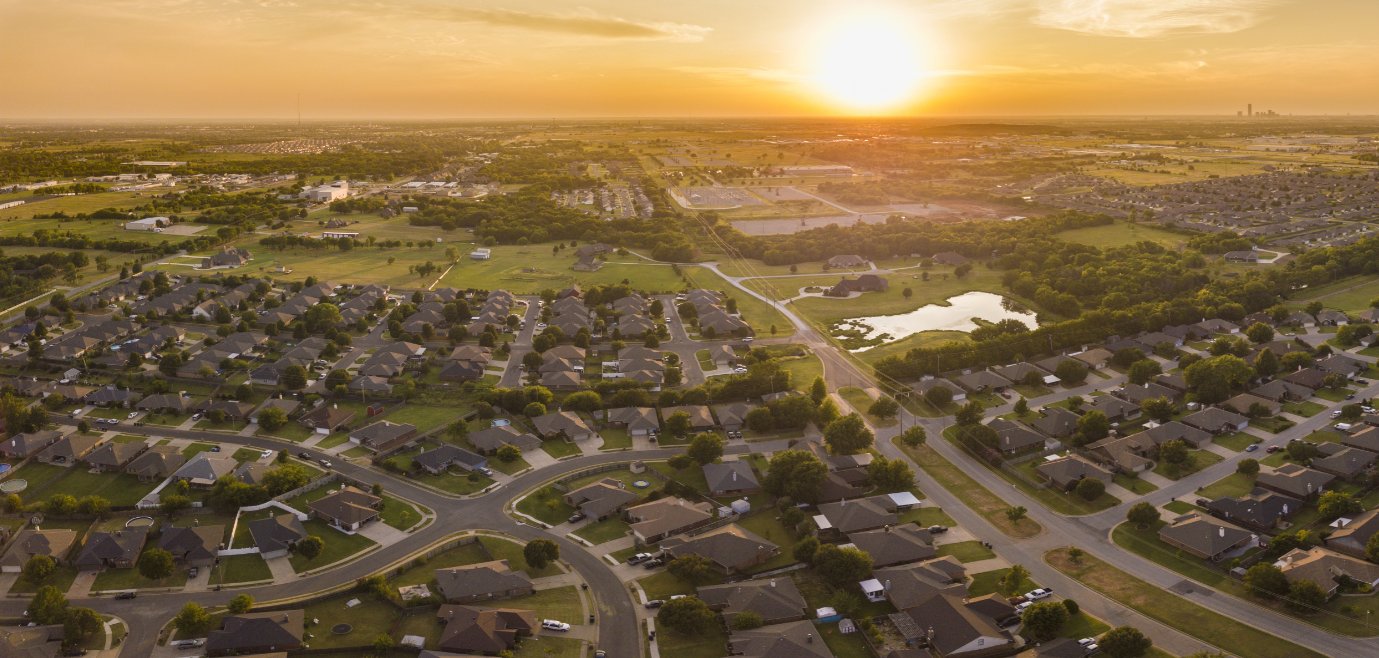
A regional distribution building in Moore has to do two jobs at once: move product efficiently and keep people safe when the sky turns. We build commercial, light-industrial and civic structures for owners in Moore who want both, with slab flatness and dock layouts that suit the tenant and structural details that respect what this city has lived through.
Moore's industrial pipeline is real. On June 24, 2026 the Oklahoma Department of Commerce announced that McKesson selected the North Moore Industrial Park for a 330,000-square-foot regional pharmaceutical distribution facility with $179 million in total capital investment and more than 200 direct jobs. A building with temperature-sensitive inventory is not a plain warehouse: it needs backup power, controlled loading, security zones and a cold chain that does not fail when the grid does. We are not working on that facility, but the market it signals is the one we plan for.
The sections that follow explain how we handle storm-conscious design, the local code posture, building types and the practical limits of the I-35 corridor.
The National Weather Service rated the May 20, 2013 Newcastle-Moore tornado EF-5, with a path of about 14 miles, a maximum width of 1.1 miles and 24 lives lost. Before that, the May 3, 1999 Bridge Creek-Moore tornado was rated F5, with a 38-mile path and 36 direct fatalities recorded by the state health department, and a May 8, 2003 F4 tornado began in Moore and ran about 17 miles. Owners here do not need a lecture on risk. They need a contractor who treats shelter, debris, continuity and recovery as normal design questions.
That means designed refuge areas, tied roof-to-wall connections, protected openings and a realistic plan for how a business reopens after a storm. We cost those items openly and show owners the options, from reinforced shelter rooms to full building hardening, so they can match spending to risk tolerance and insurance requirements.
Light industrial and distribution are the obvious fits, and a logistics fulfillment center or a pharmaceutical-style warehouse needs particular care with vapor barriers, loading dock canopies and roof drainage. We also build medical offices, small retail centers and municipal facilities where the same safety design carries across.
When a site is closer to the south edge of Oklahoma City, owners often compare Moore with Del City and with the Tinker-area corridors. We price the same program in each location so the differences in land cost, road access and storm exposure show up in dollars.
A 330,000-square-foot building is a long-lead building. Switchgear, rooftop equipment, dock levelers and fire pumps can take longer to arrive than the walls take to go up, so we release those orders as soon as the owner commits, through our long-lead procurement process. We then lay out a pour sequence that gets the slab placed and cured before the heavy equipment arrives.
For a shell of this scale, tilt-wall construction can be efficient, but only when casting-bed space, crane access and panel truck routes are settled early. We map those on the site plan during preconstruction and share the plan with neighbors and city staff so no one is surprised by a crane on the road. In a place that watches the sky each spring, we also hold a few weeks of float against storm interruptions.
Our site safety program in Moore starts with a weather plan. Every superintendent has a shelter location identified for the crew, a notification chain and a stop-work rule tied to National Weather Service warnings. Spring is the peak, and we schedule cranes, tilt panels and roof work with that calendar in mind.
We also protect the public: temporary fencing near schools and neighborhoods, controlled truck routes that avoid residential streets, and clean-up routines that keep debris from leaving the site in a high wind. Recording those routines gives the owner a defensible record if a storm ever raises questions about site conditions.
The Moore City Council approved tornado-inspired residential building codes requiring new homes to withstand winds up to 135 miles per hour, with hurricane straps, foundation tie-downs, continuous plywood bracing and high-wind garage doors, and officials at the time believed Moore was the first city in the nation to do so. Those rules apply to homes, but they influence how the city's inspectors and designers think about commercial buildings too.
For commercial work, we confirm the governing edition and any local amendments with the city before design is locked. Each project follows the codes the local authority adopts and enforces, so the application date and the local ordinance matter. Our permitting and entitlements service is built to handle that sequencing.
Construction of a new Southwest 34th Street bridge over I-35 in Moore began in August 2018, and the bridge opened November 21, 2019. For builders, a new crossing changes truck routing, signal timing and where a stub road can connect to a site. We study the current interchange layout and traffic counts before we choose a haul route.
The I-35 corridor connects Moore to Norman to the south and to the metro core to the north, which is useful for hiring crews and sourcing materials. For supply-chain owners looking at the whole region, our logistics and distribution page explains how we compare sites.
Share the use, the site and your storm and insurance priorities. We will outline the code path, shelter options and a schedule that holds up in spring.
FAQ
Send the property, the building type and the schedule. We review the scope, the approvals and the trade packages and explain how the project would be sequenced.