
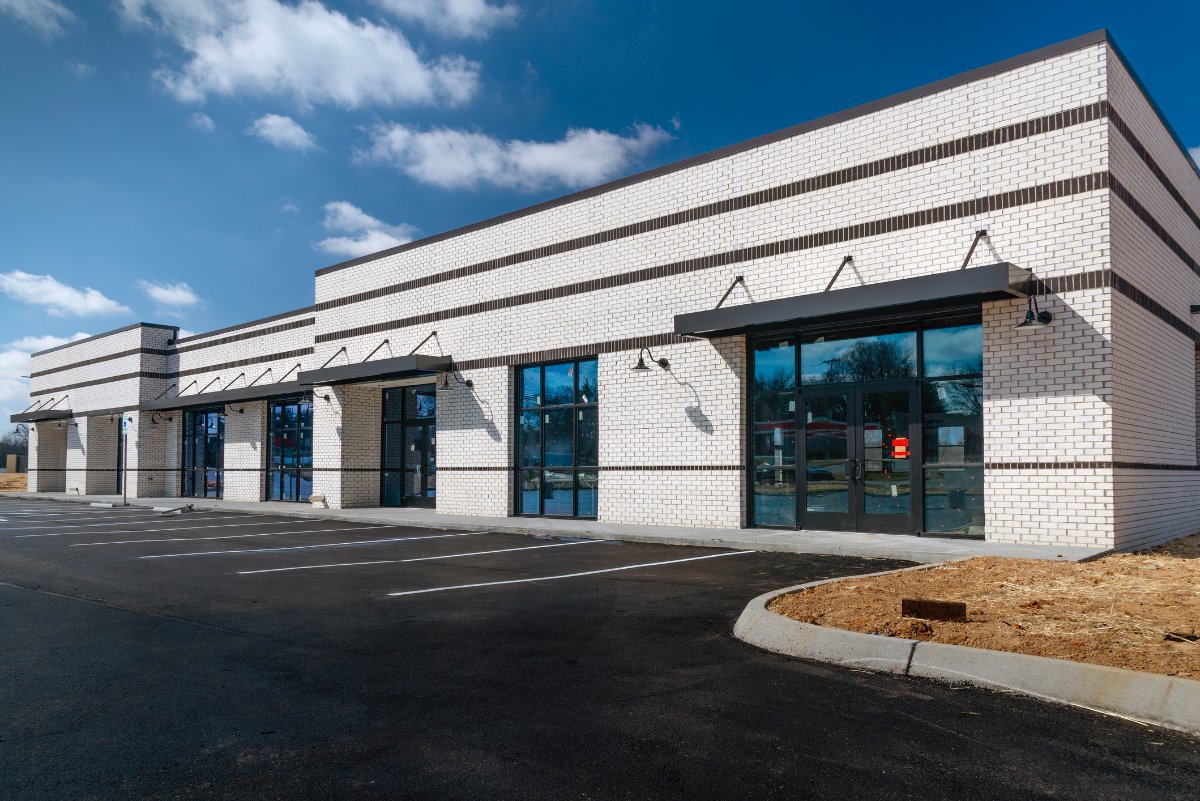
A permit set that clears Oklahoma City may need changes before it clears a town forty miles away, and the reason is rarely carelessness. Oklahoma sets minimum building codes at the state level, but each city adopts, amends and enforces its own, and counties handle much of what falls outside city limits. The first job in any entitlement process is finding out which office holds which approval.
We handle permitting and entitlements as part of preconstruction. That includes confirming zoning, preparing or coordinating site plans, tracking plan review comments, assembling inspection schedules and clearing the utility and highway approvals that sit outside the building department. We act as the owner's project manager for this work, or as a team member alongside the owner's civil engineer and attorney.
Delays in approvals are the most common reason a good project starts late, and most of them can be avoided with a clear map of the process at the beginning.
The Oklahoma Uniform Building Code Commission states that its mission is to establish minimum statewide codes affecting the built environment, and its page describes ongoing technical reviews of the International Codes and the National Electrical Code. At the city level, the City of Oklahoma City lists the International Building Code, the National Electrical Code and the International Existing Building Code among its current adopted codes, with local supplements.
The Construction Industries Board adds that general contractors are not currently required to hold a state license for general contracting, though trade licenses are required for electrical, mechanical, plumbing, roofing and certain other work. That freedom puts a burden on owners to ask who is actually licensed to do what on their job. We tell owners which trade licenses our subcontractors hold and who is pulling each permit.
We start with a pre-application conversation with the planning office whenever the city offers one. Staff tell us whether a rezoning, a variance, a plat or a special use permit might be needed, what the likely schedule is and what the neighbors will probably say. That conversation often changes the site plan and saves weeks.
Then we build a permit tracker for the owner. It lists each approval, who holds it, what has been submitted, what comments have come back and what the next step is. Plan review comments are answered quickly, with the design team, and in writing. A short, clear response usually moves a plan faster than a long one, and reviewers remember who answers precisely. For larger projects, we link this work to preconstruction estimating, so the cost of each approval and its schedule effect are already in the budget.
The City of Sapulpa's building inspector notice lists the International Building, Existing Building, Fire, Fuel Gas, Mechanical and Plumbing Codes, the International Residential Code and the National Electrical Code as adopted by the state, and says the city adopts them with state appendices and amendments. Other cities list different editions and different local changes, which is why we never assume one set applies everywhere.
We confirm four things before design is frozen: the edition of each code the city currently enforces, any local amendments, the fire code and fire marshal requirements, and whether a transition to newer editions is likely to affect a project that will still be under permit review. Owners in Oklahoma City and Sapulpa often ask whether a drawing started this year will be held to next year's code, and the answer depends on the date the permit application is accepted.
A multifamily developer usually faces a rezoning or a planned unit development review, with neighborhood meetings and a traffic study. A retailer building a pad site on an existing center may need only a building permit and a driveway review. A tribal government may be building on land where its own permitting office takes the lead, and the owner will tell us which rules apply.
Public owners add another dimension. Public construction contracts over $100,000 must be awarded by open competitive sealed bidding under the Public Competitive Bidding Act, and public buildings must provide facilities for people with disabilities under the State Fire Marshal's adopted codes. We make sure the permit schedule and the procurement schedule line up, so that a project is not ready to bid before its approvals are secure.
Approvals run in parallel and in series. Zoning must be settled before the site plan, the site plan before the building permit, and some work such as grading or foundations may be permitted separately to save time. We map those dependencies on a timeline, assign owners to each task and update it every week.
For owners with a firm opening date, we work backward from that date. If the review is expected to take eight weeks and the first comments are likely to need two more, that is ten weeks of the schedule that nobody can speed up with more labor. Telling the owner that early is more useful than promising a miracle in week twelve. Our work with design-build delivery teams often includes using early permit packages to start earthwork while the rest of the drawings finish.
Several services tie directly to the permit path. Mass grading typically needs an erosion control plan and a grading permit, and stormwater and drainage are reviewed by the city or county and sometimes by a state agency. Commissioning and closeout, covered in our closeout practice, depend on final inspections and a certificate of occupancy that the permit process sets up.
We also work with owners on questions outside the building department, such as utility service requests, driveway permits on state highways and fire flow testing. Those items are quiet, slow and easy to forget, and they can stall a project that is otherwise ready. Our permit tracker covers them, and we follow up until each is signed off.
Tell us the site, the use and the date you need to open. We will identify every approval, line them up on one timeline and tell you honestly what is likely to take the longest.
FAQ

Send the property, the building type and the schedule. We review the scope, the approvals and the trade packages and explain how the project would be sequenced.