
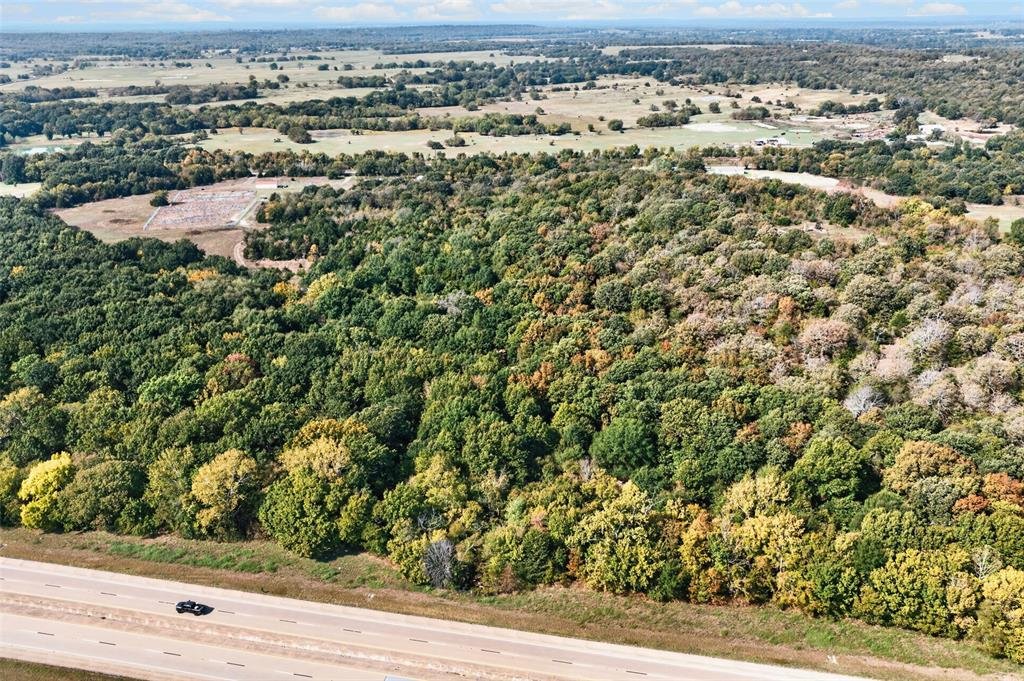
Work near a secure federal installation comes with rules about gates, badges, delivery windows and documentation, and we plan for those rules from the first estimate. We build in McAlester and around Pittsburg County for industrial users, suppliers to the installation, healthcare and education owners, and city, county and school owners, and we do it without implying any work for the installation itself.
The Army describes McAlester Army Ammunition Plant as more than 45,000 acres in Pittsburg County, about 8.4 miles south of McAlester on US 69, with McAlester as the regional center for Southeast Oklahoma. For a builder, that sentence says two things: there is a major employer with strict requirements nearby, and there is a town that serves as the commercial, medical and civic hub for a large rural area.
Both matter. The first drives demand for supplier shops, warehouses and offices. The second drives demand for clinics, schools, retail and housing, which we build with the same discipline.
Projects on or beside secure sites move at the speed of the access process. Background checks, vehicle inspections and approved delivery times can add days at the start of a job, so we ask for requirements in writing and schedule crews and deliveries around them. We keep a clean record of who is on site each day, which tools and materials come in and what leaves. Our safety plan covers daily huddles, fall protection, excavation protection and heat and cold response, and we expect every subcontractor to follow it.
Hazardous-materials awareness is also part of the work in an ordinance region. The Army's page lists 6.3 million square feet of storage and over 2,500 explosive storage areas at the plant, which stores about 33% of Department of Defense conventional ammunition. We mention this only to explain the neighborhood: a site close to restricted property can carry limits on traffic, utilities or work practices, and we ask early whether any constraint applies.
Common scopes include supplier warehouses and fabrication shops, offices, clinics and medical office space, school additions, restaurants and retail, municipal buildings and housing. We build with pre-engineered metal buildings for shops and storage, masonry and steel for offices and clinics, and tilt-up where height or fire rating requires.
We also renovate. Many older downtown buildings need new mechanical systems, accessibility improvements and code upgrades before they can serve new tenants, and the trade partner team for renovation and adaptive reuse does that work in occupied or vacant structures. For a regional center, keeping the existing building stock useful is as important as building new.
Clinics and offices in a regional center also have to serve people who drive long distances. We pay attention to parking counts, covered drop-offs, accessible routes and wayfinding, because a patient or a client who arrives from a rural county should reach the door without confusion. Those details cost little when designed in and a great deal to retrofit.
McAlester is a long way from the metro areas, and the cost of bringing in labor, materials and equipment is part of every estimate. We name the trades and suppliers we plan to use, quote what is local and what has to be hauled, and explain how that affects the schedule. If a specialty crew has to travel, we group work so they come once and finish.
We also build local relationships. Hiring a local concrete crew, a local excavation firm and local suppliers cuts hauling costs and gives the project more flexibility when weather or inspections change the order of work. Where Pittsburg County's workforce is short of a specialty, we say so and plan for it. Owners weighing other southern markets can also read about Ardmore.
The Army reported in an article dated March 24, 2026 a groundbreaking for a $74 million Ammunition Demolition Shop at McAlester Army Ammunition Plant, with two process buildings and a separate control building. Large federal and defense-related projects in a rural region draw heavily on the same electricians, steel erectors and equipment suppliers that private owners need. We note that as a scheduling risk and advise owners to line up trade commitments early.
Our standard approach is to release long-lead items during design, such as switchgear, roof-top equipment, steel and overhead doors, and to build float into the schedule for access delays and weather. We report progress weekly, flag delays when we see them and propose recovery options so the owner can choose. Closeout gets the same attention: we build punch lists as the work progresses, test systems before the final inspection and hand over manuals, warranties and as-built drawings in an organized package, so your maintenance staff can take over without chasing paper.
US Route 69 and US Route 270 intersect at McAlester, and the Indian Nation Turnpike is also among the city's transportation links, according to Wikipedia. The city-owned McAlester Regional Airport is about three miles southwest of town and has a paved runway of 5,602 by 100 feet. These facts help us plan deliveries and crew travel for projects in the city and in the surrounding communities of Southeast Oklahoma.
Owners who also have work in other parts of the state can see how we operate in Muskogee and in Durant. For public owners, we price with prevailing procurement rules in mind and keep the documentation that agencies require.
Share the site, the building and the access rules that apply. We will respond with a scope, budget range and schedule that account for distance and security.
FAQ
Send the property, the building type and the schedule. We review the scope, the approvals and the trade packages and explain how the project would be sequenced.