
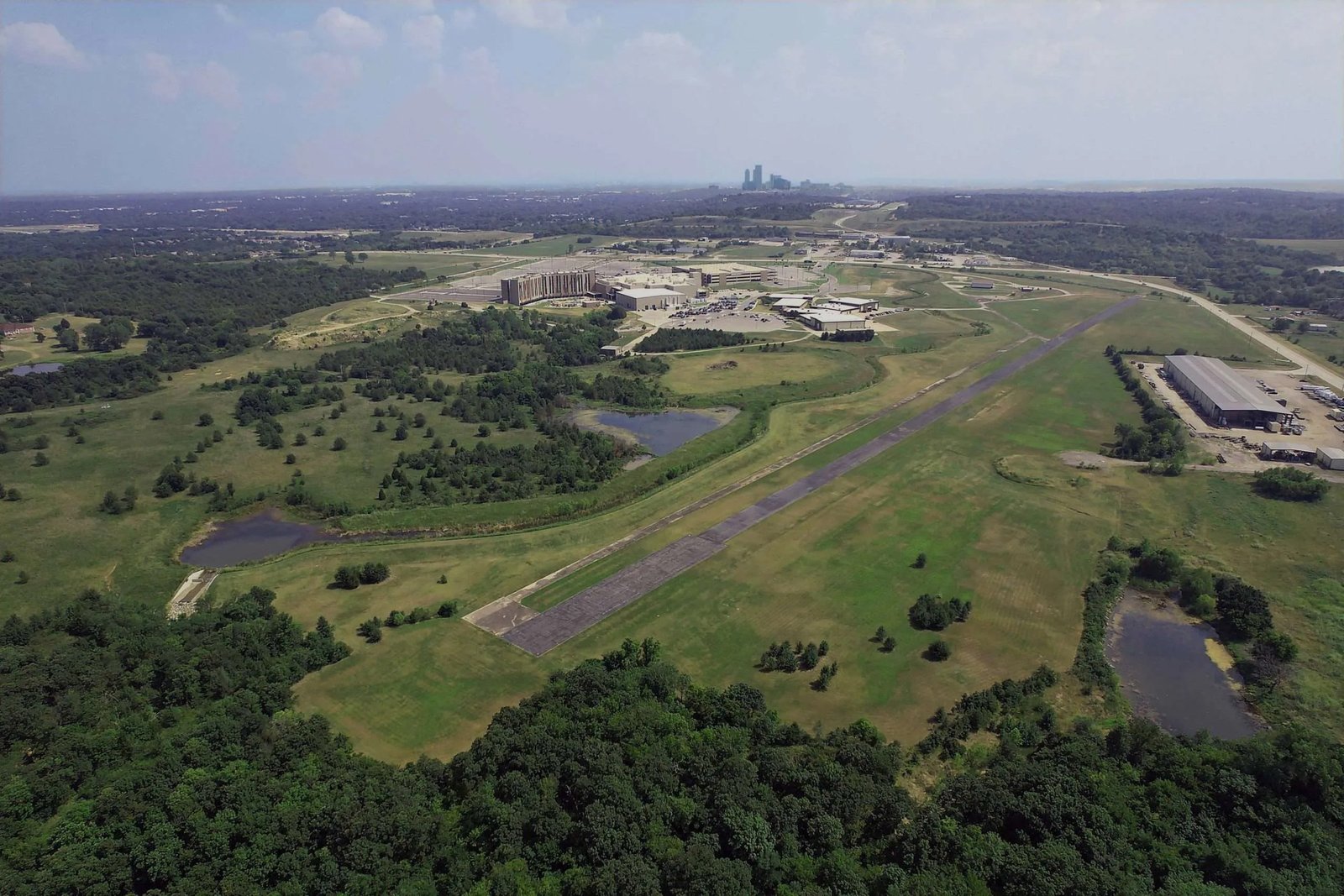
Aircraft maintenance runs on three things a builder controls: clear span, floor capacity and a door that opens on schedule. We build hangars, repair shops, parts warehouses, test areas and offices for aerospace and manufacturing owners working in and around the Tulsa International Airport district, and we start every job by asking how large the aircraft is and what moves across the floor.
The airport gives that work a lot of room. Tulsa Airports lists more than 700 acres of development real estate on 4,000 total airport acres, with 14,000 on-airport employees. News On 6 reported on August 12, 2026 that the Tulsa Regional Chamber counts 250 aerospace companies and more than 43,000 aerospace workers in the Tulsa area. Behind those numbers is steady demand for specialized buildings, from small avionics shops to large maintenance facilities.
We write about building in and around this district, not for any named company. When we price work, we do it from your program, your aircraft and your equipment list, and we put the unusual items first: door size, floor load, ventilation, fire protection and the airside rules that govern how and when we can work.
Our aircraft hangar work covers clear-span steel frames with large bifold or hydraulic doors, trench drains, foam or water-based suppression and radiant or forced-air heat. Beside the hangar bays we build shop space, tool cribs, mezzanines for offices and parts storage, and apron paving where aircraft taxi or are towed.
Smaller aerospace owners often want something different: a quiet, clean, climate-controlled manufacturing plant for machining, composites or electronics. That building needs controlled temperature and humidity, good power quality and a floor that stays flat so tooling can be set up. We build both types and know which details are shared and which are not.
Airport land adds layers to a permit. Height limits near runways, FAA notices for tall cranes, security badging for crews and airport authority review of site plans all affect the calendar. We ask for those requirements in the first week, work with your design team to file what is needed and plan crane picks around them.
Oklahoma's statewide minimum codes still apply, and the local building department confirms the edition in force and any amendments. Codes change over time, so we check which edition governs your permit date. Large-volume buildings like hangars bring special fire and life-safety requirements, and we bring a fire protection engineer in early so the suppression design does not become a late surprise.
A hangar floor is a structural element. We place thick, reinforced slabs that carry aircraft wheel loads and tugs, slope them toward drains so spills move away from the aircraft, and leave isolation joints around columns and equipment. Where a heavy lift or a large engine stand will operate, we increase the section locally and place it with extra attention to subgrade support. The trade partners for concrete foundations work to those tolerances daily.
Above the slab, we erect structural steel and metal panels or insulated walls, install door tracks and framing precisely, and coordinate the trades that follow: electrical for ground power, compressed air, lighting and communications. Long-span frames and door headers are sensitive to deflection, which is why we confirm structure and door-system loads with the engineer before steel is released.
Finish choices matter more than owners expect. Sealed or epoxy-coated floors are easier to clean after fluid spills, high-bay lighting needs to give even light on the upper surfaces of a fuselage, and acoustic treatment keeps shop noise away from offices. We discuss these items during preconstruction so they are in the budget and not left as allowances that grow later.
Recent announcements show how active the district is. Construction Equipment Guide reported on August 4, 2026 that Park Aerospace plans a $65 million advanced composite materials facility on 18 acres in the North Development Area of Tulsa International Airport, with more than 100 jobs and completion anticipated in 2028. The Tulsa Regional Chamber reported on October 22, 2026 that Lufthansa Technik Engine Services is expanding its Tulsa engine facility from 28 to 46 work bays, with more than 100 new jobs expected by 2030.
We cite these as market context only. They tell a new owner that nearby suppliers, labor and aerospace-qualified trades are being competed for, so equipment and craft schedules should be locked early. If you are planning a similar facility, our industrial site development and permitting teams can map the path from lease to certificate of occupancy before anyone commits to a date.
Aerospace projects rarely stop at a building. Many need design-build delivery to coordinate door vendors, fire protection and equipment layouts. Others need tenant improvements to convert existing space for a new user while neighbors keep working. We offer both and can price an owner-led design as well.
Maintenance employers around the field are large; a news report published August 13, 2024 says American Airlines' Tulsa maintenance base covers 246 acres with 3.3 million square feet of hangar and shop space and nearly 5,000 workers. That scale draws many smaller suppliers, and those suppliers need quick, dependable buildings. If you are weighing a site in the airport area against one in Broken Arrow or in Owasso, we can price both and compare the access, utilities and approvals involved.
Share your aircraft or equipment, floor loads and target date. We will return a scope, a budget range and the approvals your site will need.
FAQ
Send the property, the building type and the schedule. We review the scope, the approvals and the trade packages and explain how the project would be sequenced.