
Shift supervisors and store managers in Henryetta do not get to close the doors while a contractor works, so we plan renovations around the people who are still there. We handle phased upgrades of occupied plants, offices, stores and public buildings in Okmulgee County, dividing each job into zones that can be sealed off, finished and handed back in order.
The local employer base explains why this skill matters. Major payrolls in town include a glass-container maker running the old Pittsburgh Plate Glass works, the oilfield-service firm Shawcor and a pallet manufacturer, Henryetta Pallet. Operations like these run on schedules that cannot stop for a remodel, so the work has to fit around production, shipping and customer traffic.
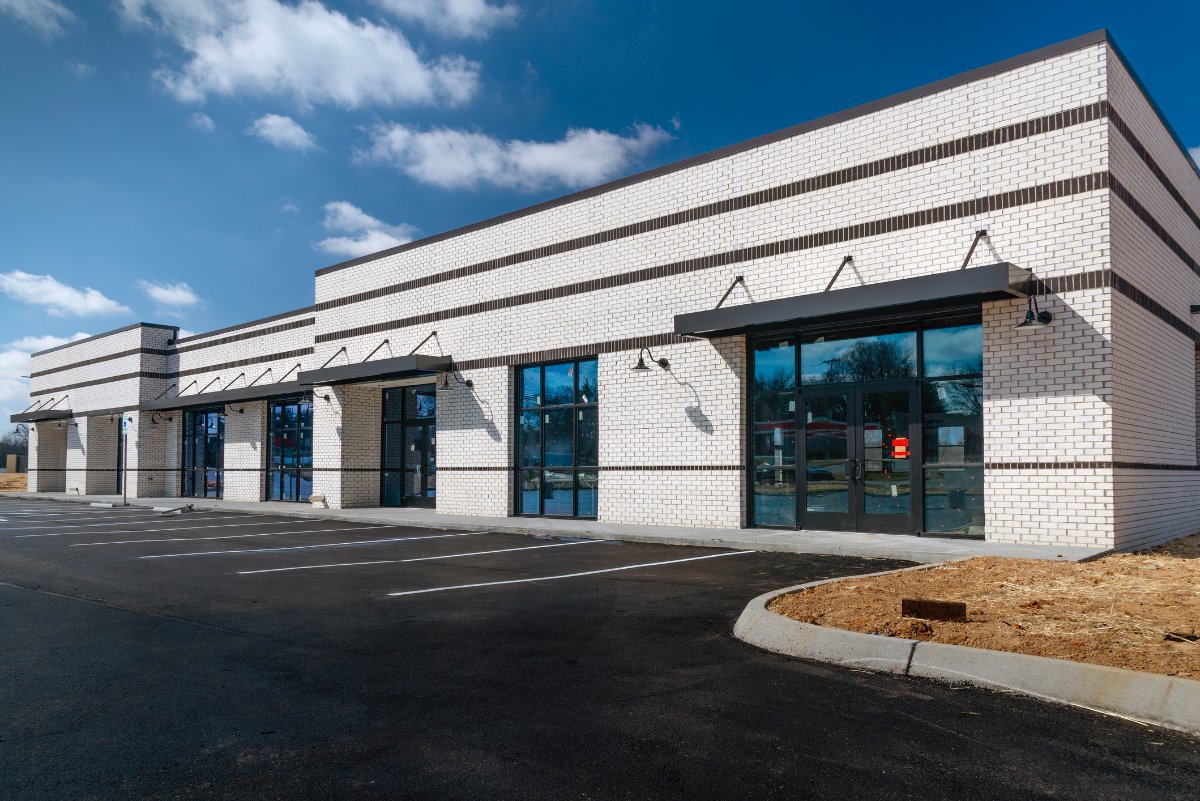
We also build out storefronts and suites for retailers who are taking over existing space. The trade partners work to our schedule and under our supervision and inspection, and the owner gets written answers on cost, timing and risk at every stage.
A February 6, 2026 news report described state Department of Commerce staff touring the glass plant for an update. The report said the facility has operated for nearly a century and houses a melting furnace said to be among the biggest anywhere. We cite it as background only, since we have no connection to that plant, and it shows the kind of long-lived industrial operation that surrounds a building owner here.
Old plants have old buildings next to them: offices, warehouses, break rooms and maintenance shops that were built for another era. Upgrading them while the plant runs is a specialty, and it calls for careful sequencing, clear communication and strict control of dust, noise and traffic.
Working around occupants adds cost: temporary partitions, protected paths, night or weekend labor, extra cleaning and moving or storage of contents. It can also save money, because existing structure, utilities and finishes often stay in place. We show each of these items in the budget so an owner can compare phasing plans.
We also include an allowance for hidden conditions. Behind an old wall there may be unrecorded wiring, asbestos-containing materials or rot. The owner sees the allowance, the process for using it and the unit prices that apply if a larger problem appears.
Our renovation and adaptive reuse work starts with an assessment of structure, roof, mechanical systems and code compliance. We then prepare a phasing plan that names each zone, the dates it closes and reopens, and the services that must remain live.
For retailers taking over vacant space, tenant improvements follow the same logic, and our commissioning and closeout process tests systems, trains staff and collects warranties before final payment.
Lake Henryetta (also known as Jim Hall Lake) holds 450 surface acres to the southeast and serves as the community's source of drinking water. For construction, that means site work near the watershed should protect water quality: stabilized entrances, silt controls, careful fuel and chemical storage and quick cleanup of spills.
These rules apply to renovation too, since concrete washout, paint and solvents can reach storm drains. Roof drains and parking lots feed runoff toward the same watershed, so we look at where each downspout and catch basin leads before demolition starts, and we protect inlets that connect to the lake. We tell every trade partner how washout and waste are handled, and we inspect the controls during our site visits.
Henryetta owners ask us for production-floor upgrades, warehouse reconfiguration, office remodels, clinic and bank interiors, retail shopping center suites, restaurants and city buildings. Each has different demands for ventilation, power, flooring and accessibility.
The shared principle is to treat the occupied side as the priority. A bank branch may need a secure vault wall left alone; a restaurant must keep its hood and grease systems compliant; a clinic must protect patient privacy. We list those rules in the plan. Before work begins, we meet with the owner's staff, identify critical operations and agree on rules for noise, smells, deliveries and safety.
Our manufacturing clients value predictable shutdown windows and clean handovers. We ask when lines run, when maintenance days fall and which utilities cannot be interrupted, then plan the work to match. Contractor access, lockout rules and visitor orientation are set at the first meeting. Hot work near furnaces, ovens or fuel lines requires special permits and a fire watch, and we do not begin until the owner's safety lead signs off.
Smaller local firms, such as pallet makers and oilfield suppliers, may need a yard, a shop or an office more than a plant upgrade. We scale our process to the project, with the same written scope and schedule. A yard expansion or shop remodel can often be finished in a few weeks, but we still plan the utilities, drainage and inspections as carefully as we would for a larger job.
Interstate 40 meets US-75 here, and the town also has US-266 and Oklahoma Highway 124. The Indian Nation Turnpike, 105 miles of divided highway that begins at Hugo, finishes its run at the interstate in Henryetta. Material deliveries, crane trucks and inspectors can reach the town from many directions, which helps keep a phased schedule on track.
We plan deliveries for off-peak hours, stage materials on site where space allows and coordinate trucks with the owner's own shipping traffic. Nearby cities such as Bixby, Jenks and McAlester offer additional suppliers when needed.
Occupied work needs a layered safety plan. We separate construction traffic from foot traffic, control hot work with permits, protect fire exits and sprinklers and keep a clear emergency plan that the owner has approved. In industrial settings we follow the owner's lockout, forklift and hazard communication rules.
Every trade partner submits a safety program and attends an orientation. Our superintendent inspects daily, records corrections and stops work if conditions change.
Tell us what must keep running, where the work will happen and when you can allow shutdowns. We will return a phasing plan, a budget range and a schedule.
FAQ
Send the property, the building type and the schedule. We review the scope, the approvals and the trade packages and explain how the project would be sequenced.