
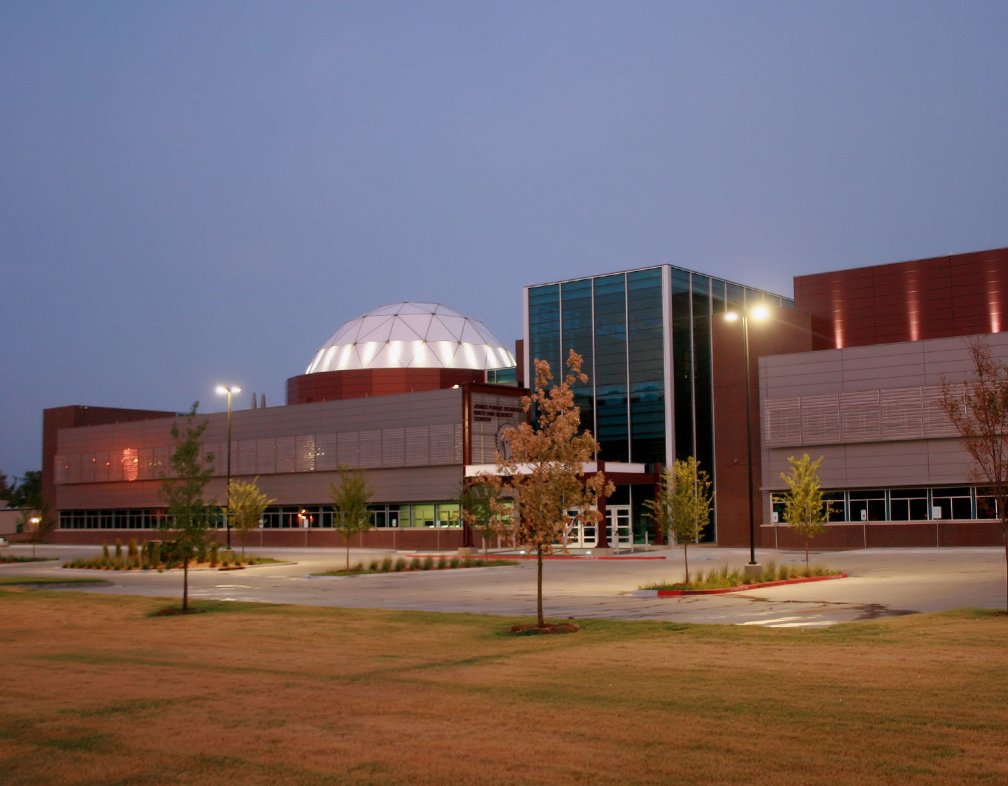
Retail and hospitality owners on the south edge of Tulsa buy sight lines, parking counts and a good relationship with the road crews next door, and we build with all three in mind. Our work in Jenks covers shopping centers, restaurants, hotels, offices and municipal buildings on sites where the river, the levee and a busy highway interchange all have a say in the design.
The road network is changing as we write. ODOT's Tulsa traffic advisory as of early November 2026 lists a US-75 bridge rehabilitation in Jenks, northbound and southbound between SH-364 (Creek Turnpike) and 96th Street, with one lane per direction through fall 2026. The Creek Turnpike, which is 33.22 miles long, has a modified cloverleaf interchange with US-75 in Jenks, according to Wikipedia. Together they make this one of the busiest access points in the southern metro, and a builder who ignores their schedules will lose days on the job.
The sections below explain how we plan Jenks projects around traffic, flood protection, public works and the demands of tenants who need to open on a date.
A typical Jenks job is a package: a pad site with parking lot construction, a core-and-shell building and a tenant finish. We price the package so a developer can see, in one document, what a ready-to-lease building costs. For restaurants and hotels, we add kitchen, exterior and amenity packages with equipment lead times shown separately.
Owners comparing riverside sites with those in Bixby or Tulsa can ask us to run the same program in each. The numbers often show that land price is only one part of the story, with site work, access improvements and flood-related costs making up the difference.
Wikipedia reports that in 1986 the Corps of Engineers released up to 300,000 cubic feet per second from Keystone Dam, leading to a mandatory evacuation order in Jenks, a city protected by a Corps-built levee dating to 1948. Anyone building in the lower areas should treat that history as an engineering input. We review flood maps, the levee's influence on groundwater and drainage, and floor elevations for any site close to the river.
Practically, that can mean raised pads, flood-resistant materials on the ground floor, sump or pump provisions and careful stormwater design so that detention does not draw groundwater against a foundation. We discuss the owner's insurance and lender requirements early, because they often set the bar higher than the minimum code. Stormwater and drainage design is a core part of our preconstruction work here.
News On 6 reported on July 26, 2023 that construction on Tulsa Premium Outlets, just south of the Creek Turnpike near the Oklahoma Aquarium and the river, had resumed, with developers saying the outlet mall would have almost 100 shops and open in 2024. We cite that report as a sign of the visitor-oriented development in the area and do not claim any role in it.
For owners building nearby, we offer hospitality hotel construction and retail center work that focus on sightlines, signage approvals and the turning movements that customers will use. A hotel or restaurant near a visitor attraction needs strong site lighting, accessible routes and a quick path for deliveries that does not cut through the guest entrance.
The City of Jenks reports that its Elm Street widening from 111th to 131st Street, three lanes to five, costs $16 million under the 2020 G.O. Bond, with Phase I beginning in January 2025 and completion anticipated in February 2027 as of the October 14, 2026 update. When a road is widened, driveways move, utilities are relocated and property values shift. Owners with land along such a corridor should ask what the final access will look like before finalizing a site plan.
We follow these public projects and incorporate them in the schedule. If the road will be complete before your opening, the plan can assume the final configuration. If it will not, we design temporary access and signage. Public agencies also build in Jenks, and our government and public sector team knows how to respond to a bid package.
Visitor-driven businesses are seasonal, and a restaurant or hotel that misses its target by two months can lose a full selling period. We build schedules backward from the opening date and name the three or four items that will decide it, which are usually permit approval, the kitchen or mechanical equipment order, the exterior envelope and the final inspection. Each has a named owner and a due date.
For larger projects we often propose construction management at risk, which lets us advise during design and release early packages for site work and long-lead orders while the rest of the drawings are completed. That overlap can shorten the calendar by weeks, and a guaranteed maximum price keeps the owner's lender comfortable.
Spring storms and river-level changes both affect work here. We monitor the National Weather Service forecasts, move equipment away from low ground when heavy rain is predicted and keep erosion controls in good repair. Excavations are not left open overnight when severe weather is in the forecast.
Near the interchange, we separate pedestrians from trucks, light the site and maintain clear emergency access for fire apparatus. Weekly safety meetings cover the specific hazards of the week, such as crane picks, deep trenches or roof work.
Share the site, the program and the opening date. We will review flood and access constraints and send a scope and schedule you can take to your lender.
FAQ
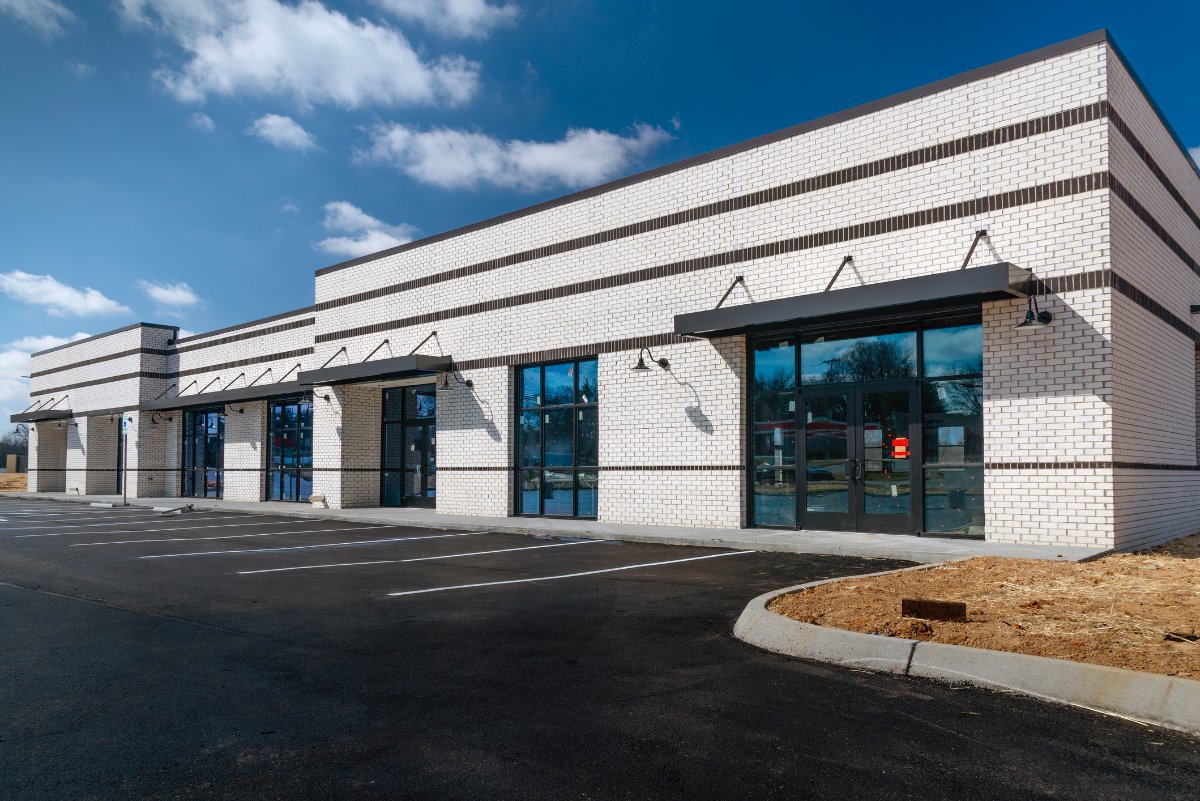
Send the property, the building type and the schedule. We review the scope, the approvals and the trade packages and explain how the project would be sequenced.