
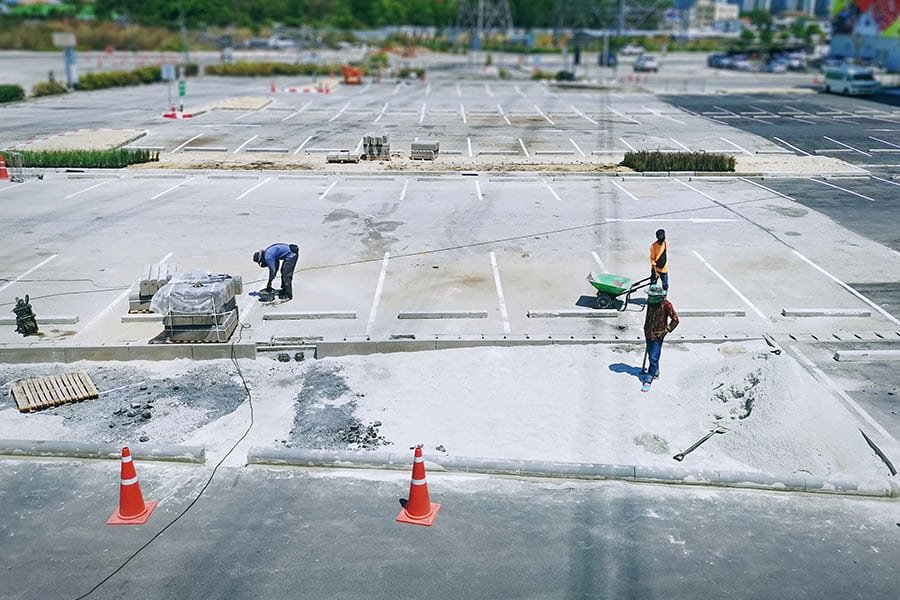
Closed ramps and narrowed lanes are the backdrop for much of the paving work in Oklahoma right now. ODOT's Tulsa traffic advisory as of early November 2026 lists a major I-44 and US-75 interchange improvement with ramp and street closures continuing through summer 2028, and the access owners in Tulsa rely on for customers and deliveries changes week by week. A parking lot that looked easy to reach when it was designed can be a hard site to build by the time the contractor arrives.
We build new lots, expansions, mill-and-overlay work and complete reconstructions for retail centers, medical campuses, schools, tribal government sites and public agencies. The work looks simple from a distance, but it is a long list of details: subgrade, base stone, asphalt or concrete thickness, drainage slope, accessible stall layout, striping, lighting conduit and the curb that keeps it all in place.
Most owners care about two things, how long the lot will last and how little disruption it causes while we build it. Both depend on decisions made before the first truck arrives.
Paving fails from below. Before we price a lot we want to know what is under it, because a lot built over soft subgrade or poor drainage will crack and pothole no matter how good the asphalt is. We review borings where they exist, probe the site where they do not and propose undercut or stabilization where the ground needs it.
Existing lots tell their own story, and on a retail center or a medical office campus the story usually starts at the entrances. Alligator cracking means the base has failed, edge cracks mean drainage trouble and ruts at drive entries mean the surface was too thin for the truck traffic. We walk each lot with the owner and decide whether a mill and overlay will serve for another decade or whether the pavement needs to come out and be rebuilt. An honest recommendation sometimes costs us a bigger job, and we make it anyway.
Beyond the paving itself, a lot normally includes grading, storm inlets, curb and gutter, accessible parking stalls with their ramps and signage, wheel stops, striping, pole bases for lighting and the connections to utilities. We coordinate these pieces as one package. A good parking lot has no ponding, no tripping edges and a layout that moves customers and fire trucks as intended.
Material choice matters too. Asphalt is faster and cheaper to install and easier to patch, while concrete lasts longer and handles heavy loads from trash trucks and delivery vans. Many sites use both, with concrete at dumpster pads and drive-through lanes and asphalt in the stalls. We lay out those choices with the owner according to traffic, budget and maintenance plans, and we provide pricing for each option.
A healthcare system needs lots that are easy to find, close to entrances and clear of ambulance routes. A retailer in a shopping center needs enough stalls at the front and a smooth flow for deliveries at the back. A school district needs bus lanes and drop-off queues that keep children away from traffic. A tribal government that is a major local employer needs worker parking, event overflow and public access to its offices.
In Tahlequah, the Encyclopedia of Oklahoma History and Culture states that in 2000 the Cherokee Nation employed more citizens than any other entity in the town, with the state university a close second. That kind of employment concentration affects how a campus handles daily traffic and special events. Our Tahlequah page describes how we work with tribal governments and other public owners on projects of this type.
The largest variables are the area, the pavement thickness, the subgrade condition, the amount of drainage work and the haul distance for asphalt. Hot-mix asphalt has a limited travel time, so a remote site may need a different delivery plan. Fuel and oil prices also affect asphalt pricing, and we tell owners when a quote is time-limited.
City projects have their own cost signals. The City of Jenks reports that its Elm Street widening from 111th to 131st Street, three lanes to five, costs $16 million under the 2020 G.O. Bond, with Phase I beginning in January 2025 and completion anticipated in February 2027. When public projects are underway next door, owners should expect temporary access constraints and plan their paving schedule accordingly. We bring that kind of local awareness to each estimate, and our work in Jenks and nearby suburbs reflects it.
Most owners want to keep their business running during construction, so we plan in sections. A retail lot might be built in thirds, so customers always have a third of the stalls and a clear path to the doors. A medical campus might need night paving to avoid appointment traffic, and a school lot may be scheduled for summer break. We confirm those windows early so material orders and crew schedules can be set to match.
Weather decides the rest. Asphalt cannot be placed on a wet base or in very cold temperatures, so we watch the forecast and keep a flexible crew. Concrete has its own temperature limits. We communicate every schedule shift to the owner, and we set up temporary signage, barricades and walkways so the public is never confused about where to go.
Working in an active lot means working around cars and pedestrians. We set up barricades, flaggers and clear detour routes, and we keep construction traffic separate from customer traffic wherever possible. Heavy equipment gets spotters, and open excavations are covered or fenced off overnight.
Accessibility is not optional. Parking stalls, ramps, access aisles and signage must meet federal and state accessibility standards, and for public buildings Oklahoma law requires plans that provide facilities for people with disabilities. We lay out those elements carefully and check slopes with a level before the paving is placed. Fixing a ramp that is too steep after the concrete has cured is expensive, and an inspector will not let it slide.
Send us your site plan or the address of the lot you want fixed. We will inspect it, recommend a repair or replacement and give you a price and a phasing plan.
FAQ
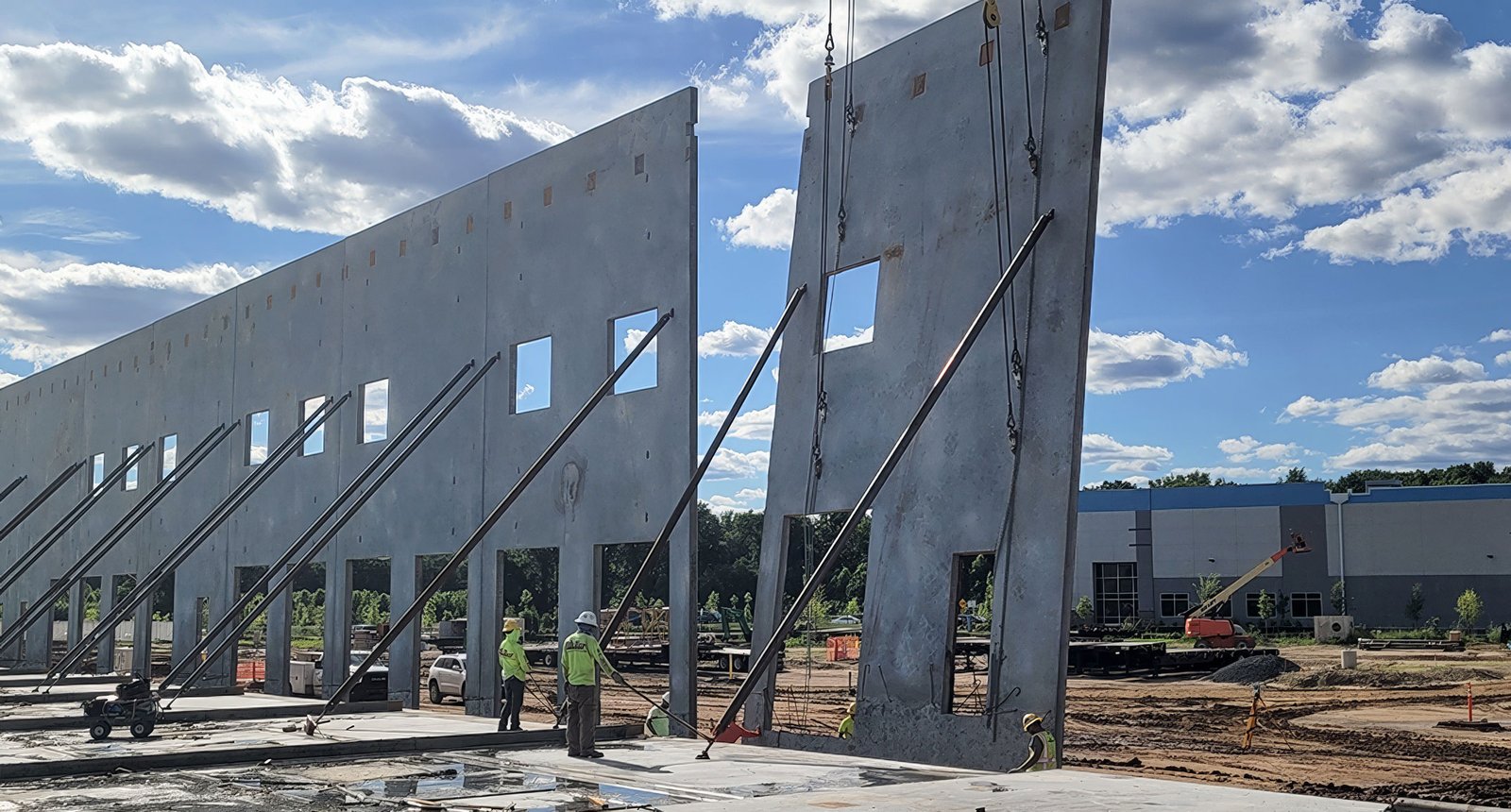
Send the property, the building type and the schedule. We review the scope, the approvals and the trade packages and explain how the project would be sequenced.