
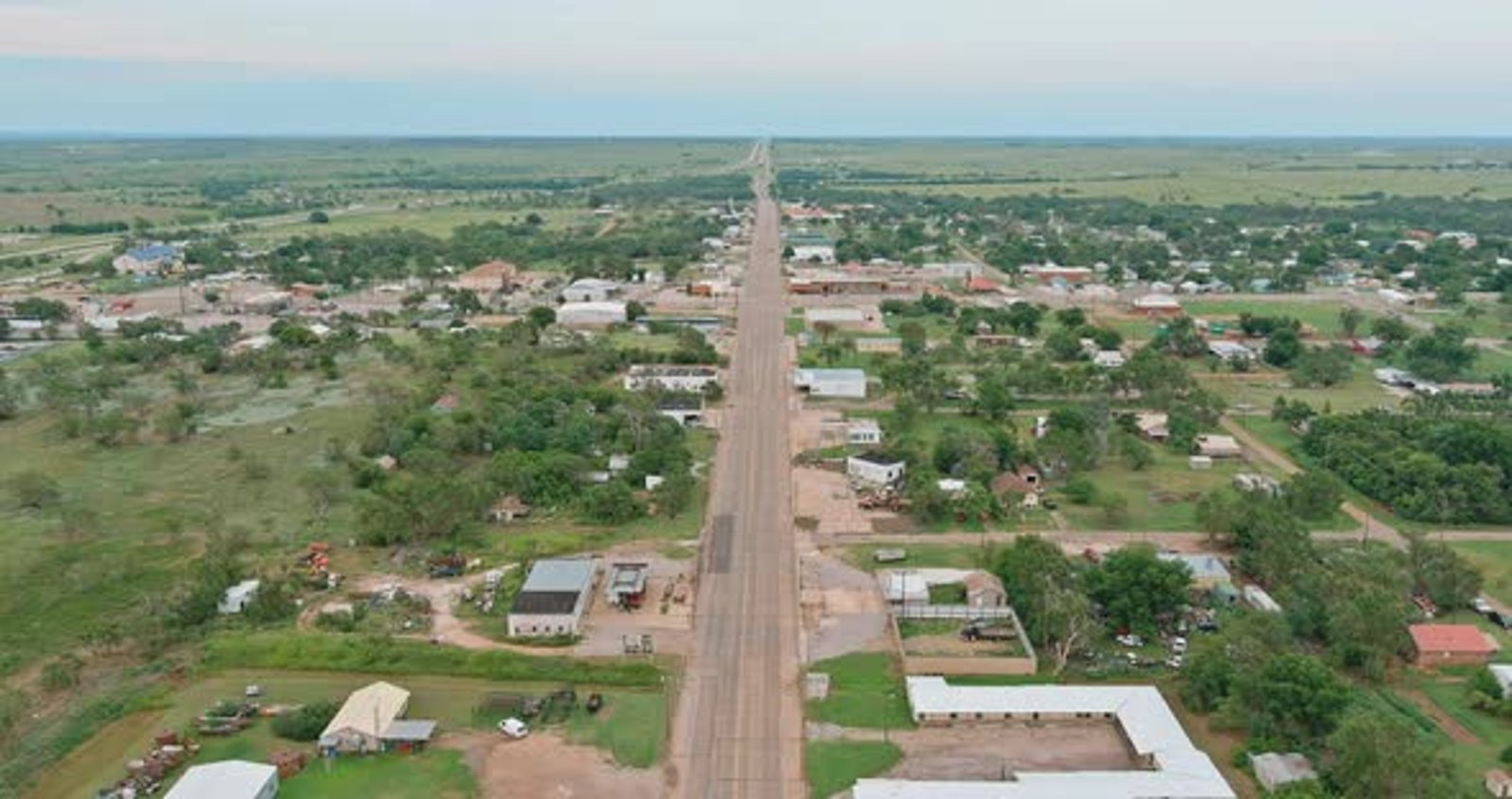
Aerospace tenants looking at western Oklahoma want a hangar, a slab and a runway apron that can take the largest aircraft they service, and we build the structure and paving behind that. Our work near Clinton includes clear-span hangars, maintenance shops, parts warehouses, offices and the utilities around them, and we start with the aircraft the building will hold.
Wikipedia reports that Infinity One Oklahoma Spaceport, formerly Clinton-Sherman Industrial Airpark, is near Burns Flat in Washita County, serves Clinton, and was renamed by the Oklahoma Space Industry Development Authority in an announcement on April 14, 2026. The Infinity One site lists a main runway of 13,501 ft of all-weather concrete with a 1,000 ft asphalt overrun at each end, and describes a 1,100-acre industrial park with land and buildings for lease, within 7 miles of Interstate 40. A runway of that length and an industrial park of that size open possibilities for maintenance, storage and test-support buildings.
We keep the details practical, and we tell owners early which decisions belong to the airport operator, which belong to the design team and which belong to us. Clinton and Burns Flat are in a rural setting with long deliveries and wide-open sites, so a builder has to plan hauling, utilities and weather carefully. We say so in the first conversation.
Wikipedia reports that Premium Aerospace announced a $120 million investment at the Infinity One Oklahoma Spaceport in October 2022, that its Hangar 234 opened October 9, 2025, and that it performs maintenance, repair and overhaul work on 737 and larger aircraft. We cite this only to explain what a maintenance hangar for larger aircraft involves, and we claim no part in it. The source is a general reference and we treat its details cautiously.
A hangar for narrow-body or larger aircraft needs very wide clear spans, doors high enough for tail clearance, a floor slab that supports jacks and tugs, trench drains, fire suppression sized for the fuel load and extensive utilities: compressed air, power, lighting and ventilation. We coordinate the structural design with the hangar door supplier early, because doors weigh a lot and determine the header design. See our aircraft hangar and crane building pages for related structure choices.
Aviation concrete has to be flat, durable and well-jointed. We supervise the forming, placing and finishing of slabs and aprons with attention to subgrade preparation, joint spacing, reinforcement and curing. For a hangar slab, we also plan for thickened edges at the doors, embeds for tie-down points and slopes toward drains that meet the airport's requirements.
Joints deserve particular care. A hangar floor that cracks at the door line or settles near the apron edge creates daily trouble for tugs and for aircraft that have to be rolled in and out, so we detail the transition between hangar slab and apron, dowel the joints and verify subgrade compaction with testing before any concrete is placed. Taxiway and apron paving often falls under airport standards, which can include special mix designs, testing and inspection. We confirm whether a project is subject to those rules or to local commercial standards, and we price accordingly. Our commercial concrete floors and truck courts and dock aprons pages describe the base work.
The Oklahoma Historical Society says the Oklahoma Route 66 Museum at 2229 W. Gary Blvd. in Clinton officially opened on September 23, 1995 and had over 930,000 visitors in 25 years. The City of Clinton lists the museum as located off I-40 at Exit 65. We mention the museum only as a sign of steady highway traffic, and we make no claim of work there.
For hotel, restaurant, fuel and service owners near an interstate exit, steady travelers mean buildings must handle peaks, such as holiday weekends and summer travel. We build hospitality and roadside commercial with attention to parking, truck turning, signage and fast construction. Our hotel construction pages, along with our hospitality group page, describe how we handle these building types.
A large industrial park with land and buildings for lease can reduce a tenant's first cost, but there are still hidden items: older building conditions, available utility capacity, and distance to crews and suppliers. We recommend a condition survey of any existing building and a utility capacity letter before an owner commits to a lease. Where a lease building needs work, we price demolition, roof and floor repairs separately.
Freight also matters. Steel, doors, electrical equipment and aircraft-specific systems may come from far away, so we ask for delivered prices. A short-term lease usually argues against heavy new investment, while a long lease supports it. We help owners compare a new-built hangar with a renovated existing building, and we explain the schedule effect of each. See renovation and adaptive reuse for the second option.
The National Weather Service Norman tornado list for Clinton records an F3 tornado on May 22, 1981 southwest of Clinton and east of Arapaho, with 12 injuries and a 267-yard path width. A wide hangar door and a large roof are sensitive to wind, so we design and check them with an engineer and install them carefully.
On an airfield, safety also means controlling vehicles, equipment height, debris and access. We follow the airport operator's rules, brief every worker and keep tools and materials secured. If your project is east of Clinton, you may want to compare it with the Weatherford market, and if you are looking farther west, our Elk City page covers a different mix of oil and wind users.
Send the aircraft, the site and the date. We will return a budget, a schedule and a list of questions for the airport operator. For a lodging or restaurant owner, include the number of rooms or seats, and we will start from there.
FAQ
Send the property, the building type and the schedule. We review the scope, the approvals and the trade packages and explain how the project would be sequenced.