
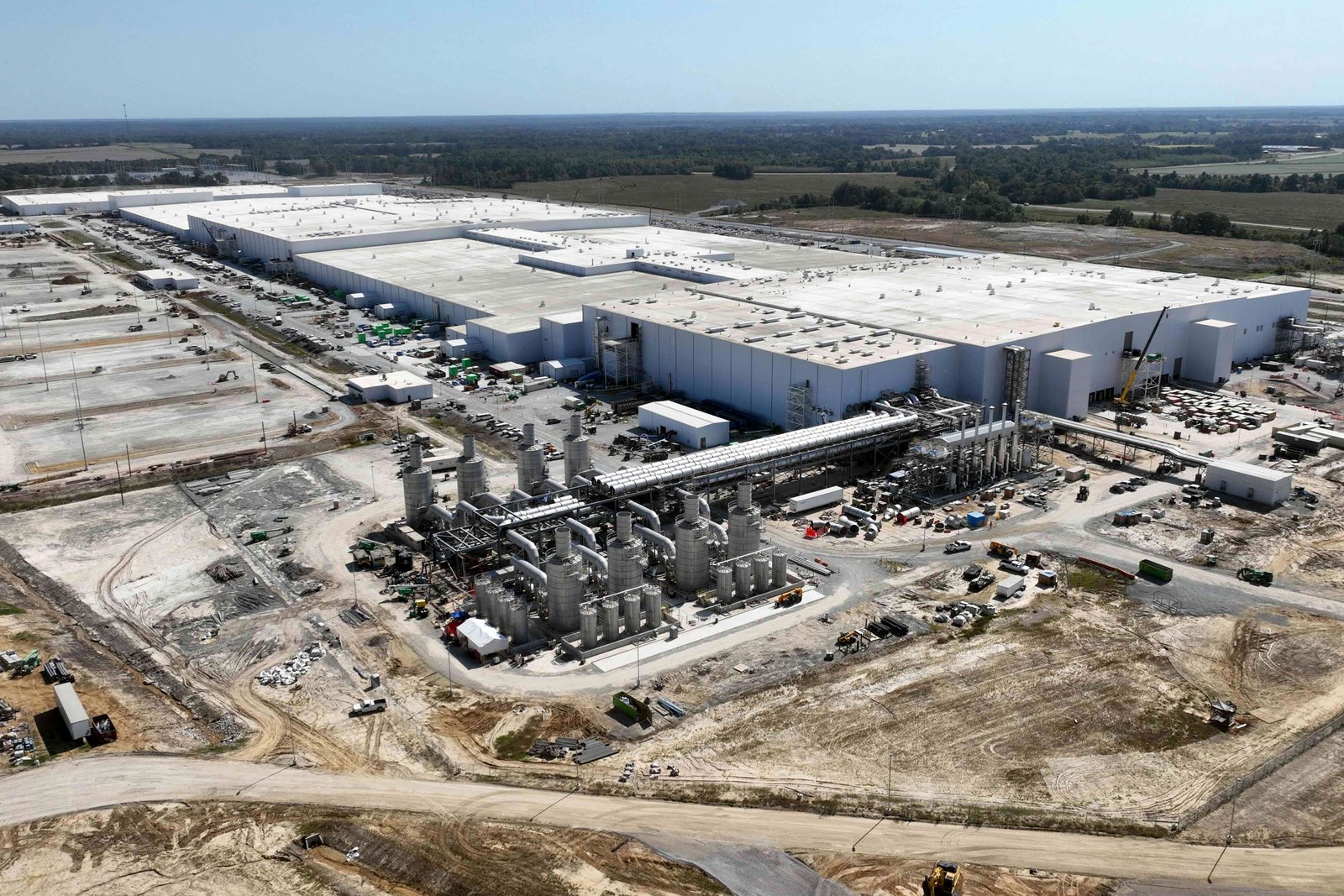
Power decides an electric vehicle plant before the floor plan does. A body shop, a battery module line and a paint hall pull load in large blocks, and the serving utility will want a signed load letter before anyone pours a footing. In Oklahoma that conversation tends to go better than owners expect. The state's Department of Commerce says energy costs run 17% below the national average and that Oklahoma produces 61% more energy than it consumes, so the gap between a site and a dependable feed is more often a schedule problem than a price problem.
We build for vehicle and vehicle-supply operators with that in mind. We do not claim an assembly campus in our portfolio, and the state does not need us to: the work that reaches this market is closer to the edges of the industry, such as a tire plant adding a 45,000-square-foot building for an advanced mixer, or a $1 billion lithium refinery rising at an industrial park in Muskogee. Both share the traits of a full vehicle plant: heavy utilities, tight floor tolerances and process piping.
If you are weighing Oklahoma for a stamping, battery, trim or tier-one supply facility, here is what the building, site and approvals involve, and where the money goes. Many of the same questions come up on any manufacturing project, and our manufacturing plant experience carries over.
Three interstates (I-35, I-40 and I-44) meet inside Oklahoma, the state counts more than 2,600 miles of Class I rail run by BNSF, Union Pacific and CPKC, and the McClellan-Kerr Arkansas River Navigation System reaches inland ports at Muskogee and Catoosa. For a plant that ships sequenced parts to an assembly customer a day's drive away, that mix of corridors is the real draw. Inbound steel coil and resin can ride the rail or the river, while outbound racks leave on trailers from a dock that never sits more than a few miles from an interstate ramp.
The best sites tend to be the ones already built for heavy industry. The Chickasha industrial park announced in June 2025 pairs a joint venture with Lightfield Energy to supply on-site power for advanced manufacturing and similar users, which tells you the park is being planned around load rather than lots. At the Pryor industrial park, custom electricity comes from the Grand River Dam Authority across a campus of about 9,000 acres. We look first at who owns the electrons and how fast they reach the property line.
A vehicle-supply building is a large clear-span box with a great deal hung from it. Typical choices are tilt-wall panels with joist and deck roofs, or structural steel with insulated metal panels where the owner wants a fast enclosure and a column grid that can move later. Building 630 at the Pryor park is a useful reference: a 274,000-square-foot precast tilt-panel building with 40 feet of interior clear height and 40 truck docks. Clear height at that level leaves room for overhead conveyors, cable tray and a mezzanine for controls without choking the aisles below.
Floors deserve their own plan. Press lines, robot cells and automated guided vehicle paths need flatness readings that ordinary warehouse slabs do not achieve, and heavy machinery often wants isolated pits and thickened pads rather than a uniform slab. We lay out the pour sequence against the equipment drawings, coordinate embeds and anchor bolts with the installer, and keep foundation and slab work from running behind the steel crew. Roof loads for rooftop air handlers and later solar need sizing before the bid.
A battery or electronics process area is nothing like a body shop, and the building has to switch between the two. Dry rooms, scrubbed exhaust, chilled water loops and hazardous-material control areas are the items that push square-foot cost above a conventional manufacturing shell. The refinery in Muskogee, a $1 billion project with 300 jobs planned at Southside Industrial Park West, is a reminder that battery supply chains start with chemical processing, and chemical processing means process piping, containment and a very different permitting file. We bring the mechanical and electrical trades in early because a duct main change can move a structural bay.
For vehicle components the other major cost block is utility infrastructure on the owner's side of the meter. A substation pad, underground duct banks, compressed air plant, process water and wastewater pretreatment can each equal a small building. We price them as their own packages inside the site and utility scope so cost does not hide in the yard.
Oklahoma has no state general contractor license, but the trades that matter most on a plant do: the Construction Industries Board requires licenses and registrations for electrical, mechanical and plumbing work. The Uniform Building Code Commission sets statewide minimum codes, yet cities adopt and enforce their own editions. Oklahoma City, Tulsa, Edmond and Norman each list their own adopted codes, and a plant follows the codes the local authority adopts and enforces. We ask the building department which edition applies to your permit date before the design team locks occupancy, egress and sprinkler assumptions.
Environmental permits for air emissions and storm discharge run on their own clock and are usually the long pole, so we map them on the master schedule beside the long-lead gear.
The long-lead list on an EV-related plant is the schedule. Switchgear, transformers, paint-booth air makeup, overhead cranes and the robot cells themselves can run longer than the building shell, so we build the procurement log before the first drawing is final and release purchase orders as early as the owner will allow. The practical goal is a building that is dry and powered when the process equipment arrives, not one that is finished and waiting.
That is where long-lead procurement pays for itself. An expansion like the one at the tire plant in Lawton, where a new building was added beside an operating facility, also shows the other common condition: work around live production. We separate construction access from plant traffic, stage tie-ins for planned shutdown windows and keep dust, vibration and crane swings away from sensitive process areas.
Oklahoma weather shapes the building more than most buyers expect. The National Weather Service Norman office counts 4,518 tornadoes in the state between 1950 and today, with May the peak month, and an average of 59.4 a year. A plant with large unreinforced wall areas, rooftop equipment and high racking needs a clear approach to wind uplift, roof attachment and shelter for second-shift crews. We talk about that during design, not after the first spring storm.
Site choice also shapes the workforce. A plant near Muskogee or Lawton draws crews on different commutes than one in a metro industrial park, and we test the schedule against spring storm season, when April and May pours rarely follow the January calendar.
Send the parcel, the process list and the date you need production to start. We will tell you what the power, the building and the permits will realistically cost and how long each takes.
FAQ
Send the property, the building type and the schedule. We review the scope, the approvals and the trade packages and explain how the project would be sequenced.