
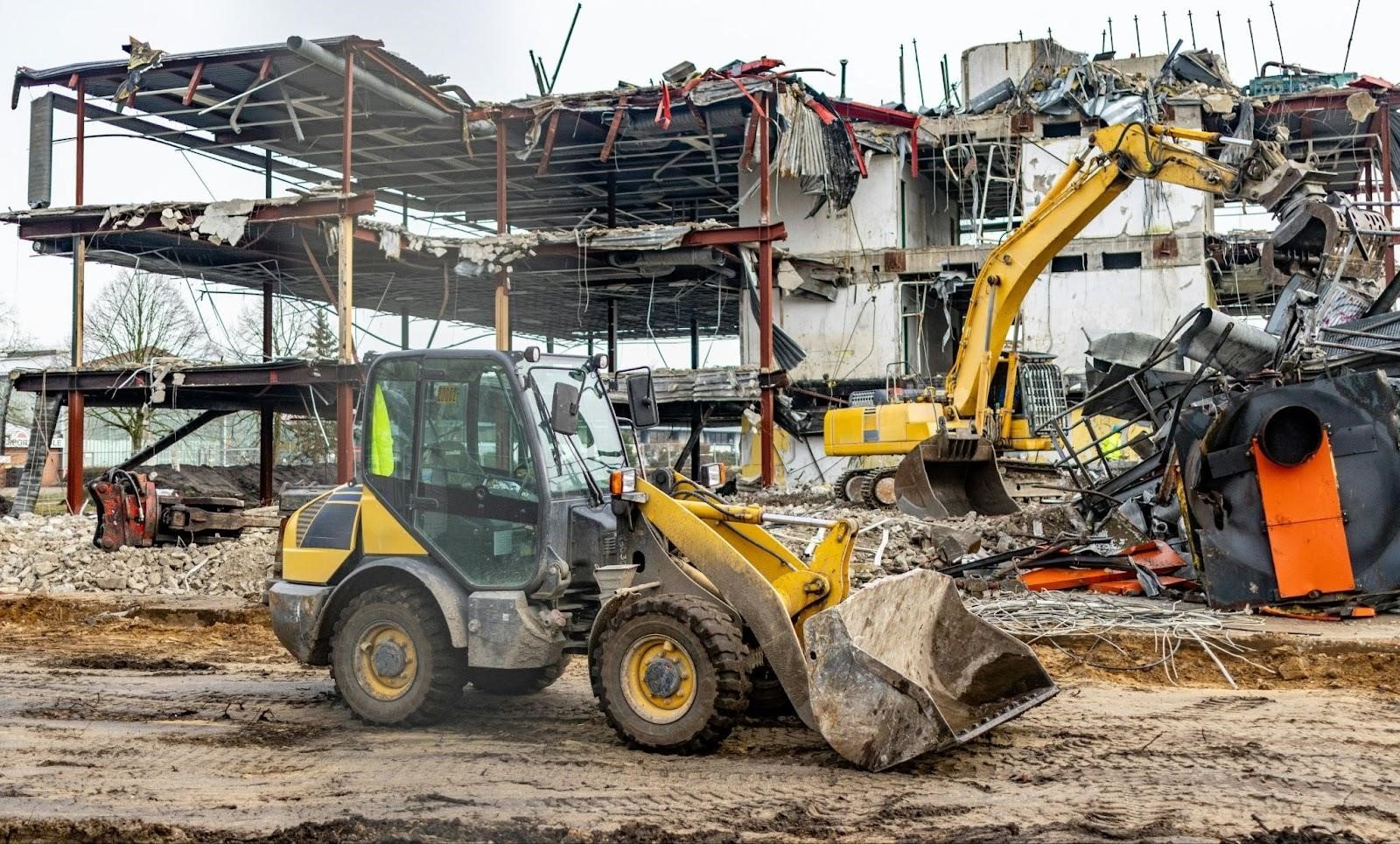
Demolition begins long before the excavator arrives. The first work is paperwork and investigation: finding out what the building contains, who owns the utilities running to it, which neighbors share a wall or a fence line and what has to be tested before anything is disturbed. A demolition that skips those steps tends to end with a stop-work order, a damaged neighbor or a surprise bill for contaminated soil.
We demolish commercial, industrial, institutional and residential-scale buildings across Oklahoma, as stand-alone work or as the first step of a new project. The scope runs from selective interior demolition ahead of a renovation to full removal of a multi-building plant, including foundations, slabs, buried tanks and utilities, with the lot left graded and ready for what comes next.
The market keeps asking for it. Plants close, retail centers lose their big tenants, schools consolidate and tornadoes take buildings that cannot be saved. Each case calls for a different plan, and our job is to match the method to the building.
A complete scope begins with the survey and abatement of hazardous materials, followed by utility disconnection and capping, protection of adjacent property and removal of interior fixtures and equipment. Structural demolition then proceeds, either by machine from the top down or by controlled methods when the building is attached to something that must stay. We then remove or crush foundations and slabs, backfill and compact, and grade the site.
Salvage and recycling are part of the plan. Steel is separated and sold, concrete is crushed for fill or base when the engineer allows, and clean wood and metals are hauled to recyclers. The revenue offsets part of the cost, and the diversion reduces landfill fees. We report tonnage and disposal to the owner so the paperwork is clean if a lender or agency asks.
Before demolition, an asbestos survey is required for commercial buildings, and lead paint, mercury lamps, PCB ballasts, refrigerants and fuel tanks all need to be handled correctly. We coordinate licensed abatement firms, keep their paperwork with ours and do not start structural work until clearance tests are in hand. If something unexpected appears, we stop, test and decide with the owner how to proceed.
Dust, noise, vibration and falling debris all affect neighbors. We control dust with water, schedule noisy work in reasonable hours, monitor vibration where nearby structures are sensitive and keep crews and equipment well away from the public. Overhead protection and exclusion zones are part of every demolition plan, and spotters are posted whenever machines swing near a boundary.
Every building has its own way of coming down. A concrete tilt-wall building with a steel roof behaves differently than a masonry bearing-wall school, and a pre-engineered steel building behaves differently again. We review the original drawings when they exist, look at the structure from above and below and decide the order of removal so that nothing collapses unexpectedly.
Post-tensioned slabs, stored energy in cables and springs, partially failed structures after a storm and buildings that have been vacant for years all need extra caution. An engineer's demolition plan is common on such jobs, and we are comfortable working from one. The trade partners for renovation and adaptive reuse take the same care when only part of a building is coming out.
In Ardmore, KGOU reported on October 26, 2023 that a tire plant that opened in 1970 would wind down by the end of 2025, with about 1,400 people losing their jobs. A site like that, with large industrial buildings, rail, utilities and a long operating history, raises a hard question for the owner: what do we keep and what do we clear? We help answer it with a survey, an estimate for each option and a plan for reuse of the pad. Our Ardmore page explains how we work in that region.
Storms create demand too. Wikipedia reports that an EF4 tornado struck Bartlesville and Barnsdall on May 6, 2024 and that recovery was still ongoing as of July 2024, and that the 1999 Oklahoma tornado outbreak destroyed a 53-store outlet center and a food distribution center in Stroud, neither of which was rebuilt. Those reports remind us that demolition is sometimes a recovery task, performed quickly and with sensitivity. We work in Bartlesville and Stroud and Chandler with that in mind.
Most cities require a demolition permit, and many require proof of utility disconnection, asbestos notification and sometimes a neighbor notice. The state environmental agency requires notification for asbestos work in regulated buildings, and a final survey proves that abatement was completed. We handle those submittals, keep copies in the project file and provide the owner with a closeout binder.
Demolition often touches stormwater rules as well. A cleared site is exposed to erosion, so we install silt fence, inlet protection and a stabilized entrance and, when the disturbed area is large enough, coordinate the stormwater permit with the owner's engineer. The trade partners for mass grading and site development pick up where demolition ends, so there is no gap between a cleared lot and a ready pad.
Demolition is quick compared with construction, but the days before it can be long. Utility disconnects are scheduled with providers who may need weeks, abatement must finish before structural work and permits must be in hand. We build the schedule around those, start the paperwork on day one and tell the owner honestly which steps are in someone else's hands.
Weather and seasons play a role as well. Wet ground slows heavy machines and hauling, high winds change how we handle tall walls and cold weather affects dust control. We plan for them, keep a flexible crew and sequence the work so that the most weather-sensitive tasks are done in the best conditions. When a project must be done before a certain date, such as a lease start or a bond deadline, we add crews rather than shortcuts.
Manufacturers consolidating plants, developers clearing a site, property owners with a failed building and public agencies with condemned structures all need demolition. Some need a fixed price and a quick start, others want a recommendation about what to salvage. In each case, we prepare a written scope, a schedule and a price that lists exclusions, so the owner knows what is and is not covered.
For a plant, the scope often includes equipment removal, concrete pits, underground utilities and tanks. For a retail site, it includes parking lots and site utilities. We cover both, and we can price the demolition separately from the new construction or as part of a combined program. A manufacturing plant in particular can hold surprises below the floor, so we use ground-penetrating radar or test pits where they help.
Send us the address, the type of structure and the date you need the site clear. We will survey it and return a price, a schedule and a list of approvals.
FAQ
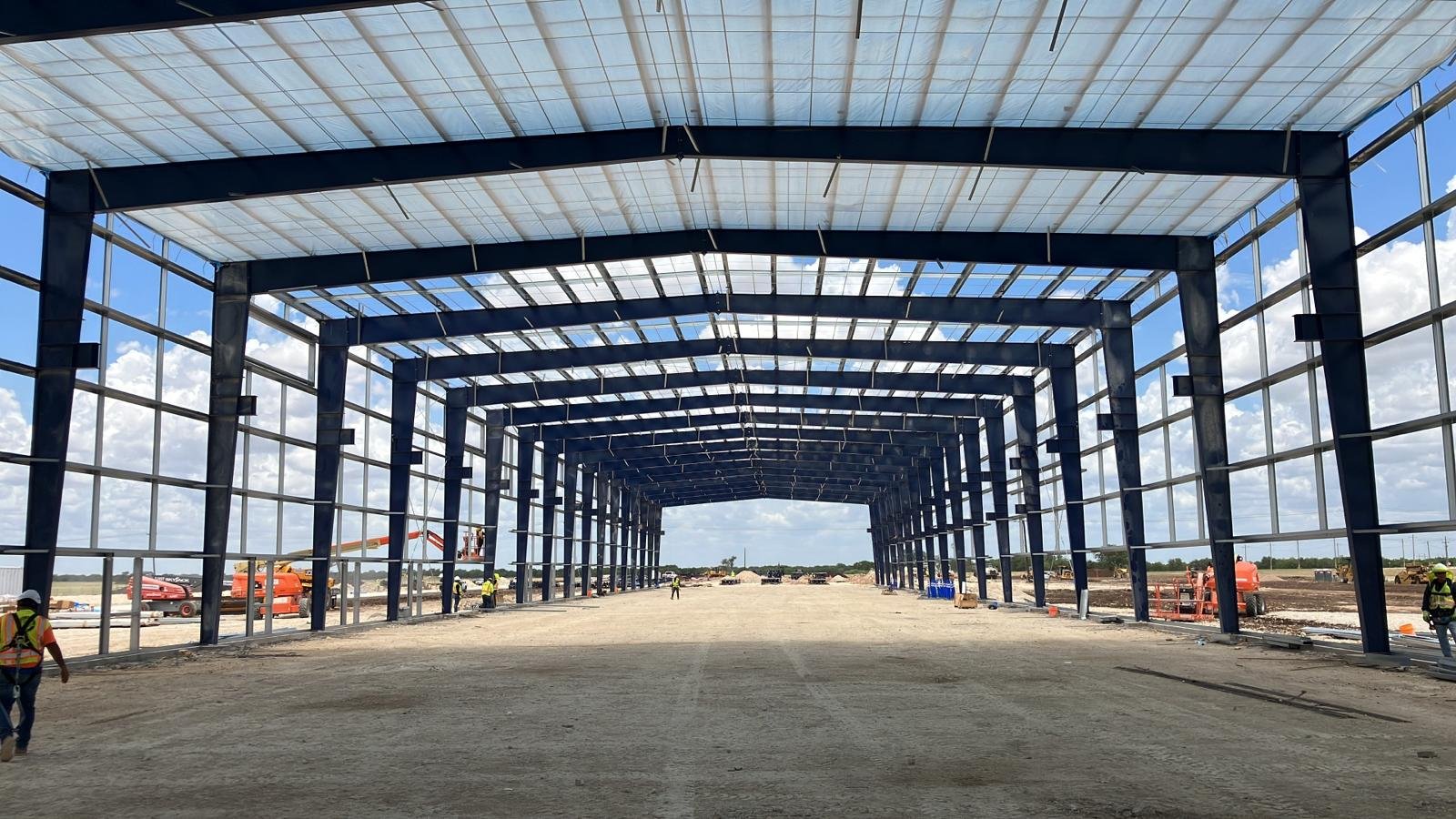
Send the property, the building type and the schedule. We review the scope, the approvals and the trade packages and explain how the project would be sequenced.