
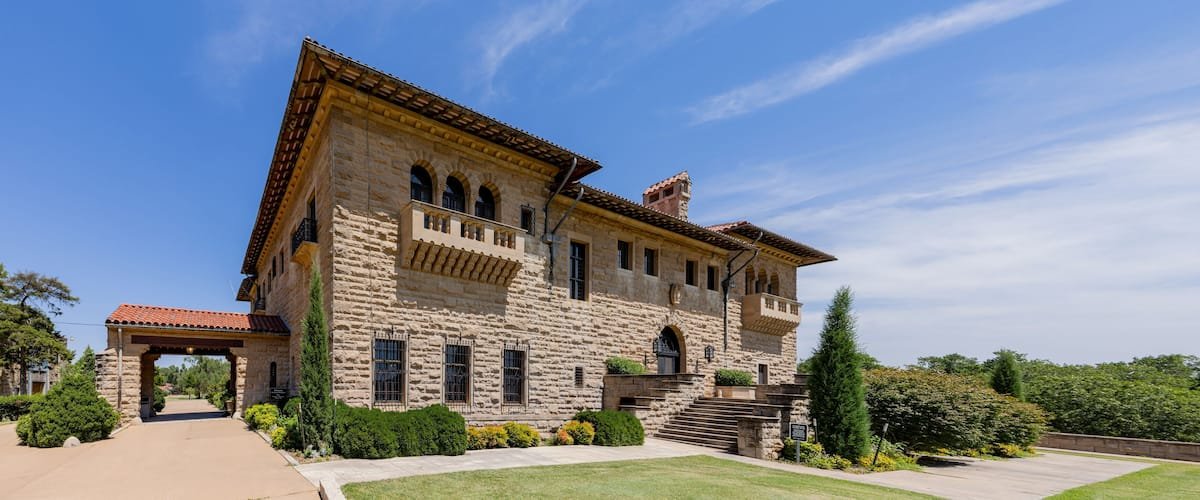
Turnaround season changes what Ponca City needs from a builder: more offices, more training rooms, more laydown ground and more places to feed and park thousands of temporary workers. We build the support buildings around an industrial plant, from craft change houses to meeting rooms to fenced yards, and we plan them so they can be used again after the peak.
Phillips 66 lists its Ponca City Refinery with crude throughput capacity of 228 thousand barrels per day, about 594 employees, and about 2,500 acres. The Ponca City Development Authority reported in January 2024 that the refinery had its largest turnaround ever in 2023, with about 2,200 contractors coming to Ponca City over a two-month period. We cite these as market facts only and claim no work for the refinery or any of its contractors. For a builder, the lesson is that Kay County has a rhythm: quiet months and surge months, and buildings must work in both.
We build on the owner's schedule, not the other way around. If a training room has to be ready before a turnaround begins, we tell the owner what has to be decided, ordered and inspected by when, and we hold ourselves to that list.
The Ponca City Development Authority reported in May 2025 the ribbon cutting of the Phillips 66 Safety Training Center, which includes an 80-seat training room and went from concept to reality in about a year according to the refinery general manager. The speed is a useful benchmark: a single-purpose training building can be done in a year if scope is fixed early. We were not involved in that project and mention it only as an example of what is possible.
A training building has design priorities that general office space does not. It needs sightlines and acoustics, power and data at every seat, flexible partitions, hands-on bays with door access for equipment and enough parking for classes that change at the same hour. We plan the mechanical systems for high occupancy, and we pour floors in practical bays for drills and equipment. See our education facility construction page for more on training and classroom work.
When 2,200 outside contractors arrive for two months, they need parking, restrooms, break areas, security, fencing, lighting, storage and often temporary power. We design these sites with stabilized surfaces so rain does not stop work, with drainage that keeps mud out of walkways, and with utility connections that can be removed or reused.
The owner's question is usually whether to build a permanent building or rent temporary ones. We price both and show the break-even: a permanent building with good insulation and a simple floor plan can serve as a warehouse or office later. For owners who need that flexibility, our flex and light industrial construction and site development and utilities pages show what is included.
A common pattern in smaller industrial towns is that a speculative building goes up first, a tenant moves in, and the tenant later buys the building and puts more money into the interior. That sequence rewards owners who plan the shell for change. A spec building that only fits one user is hard to sell, while one that anticipates several users keeps its value. We ask owners to picture three possible tenants, a light assembly shop, a distributor and a fabricator, and test the clear height, door count, power size and yard against all three before the drawings are final.
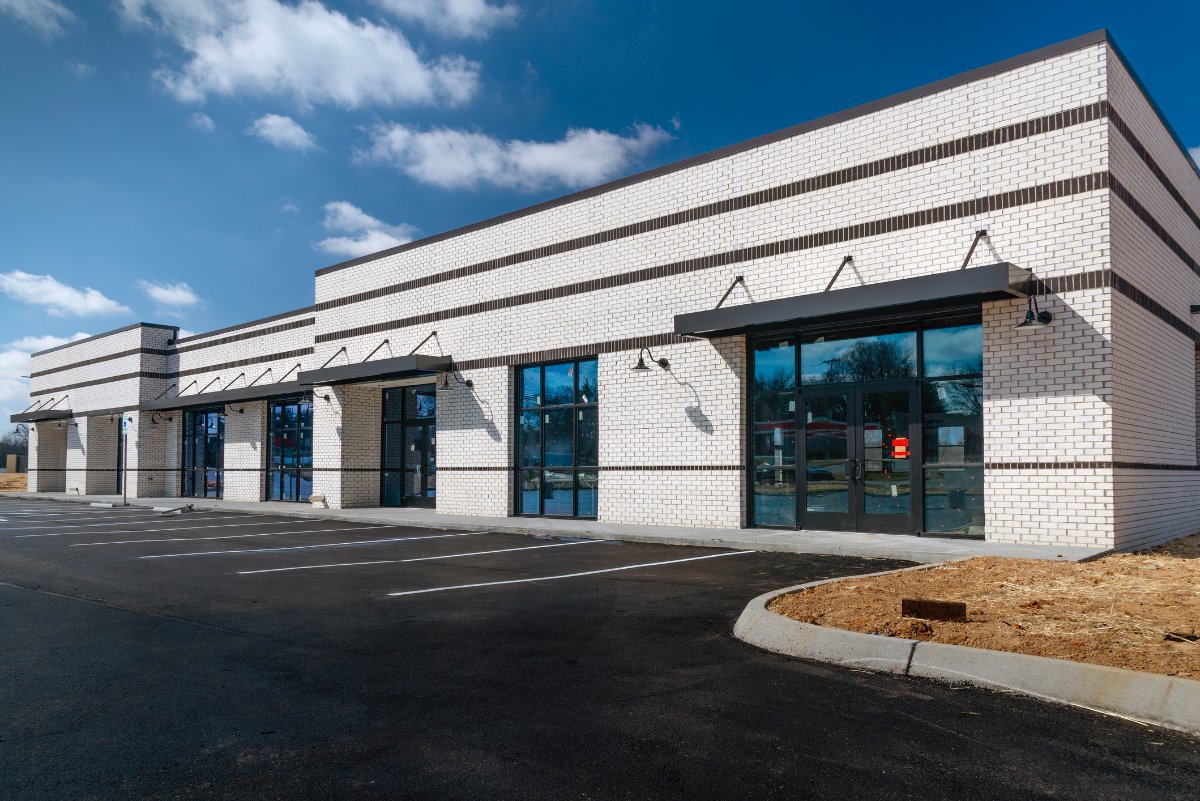
For a spec building to work, the shell has to anticipate several users: reasonable clear height, enough power capacity, a slab that can take equipment, and a plan that divides into bays. We keep first cost down by delaying finishes until a tenant is known, and we provide a price list for the interior upgrades a tenant will want. Our flex light industrial page covers the typical shell.
Wikipedia lists I-35, US-60, US-77, US-177, and OK-11 as providing access to Ponca City, and reports that Ponca City Regional Airport has a 7,201-foot runway (17-35) and no control tower. Those links make the town reachable for heavy deliveries and for aircraft that support industry. Hangars and aviation support buildings at an uncontrolled field are different from those at a towered airport, and owners should ask about operations and access before design.
Owners comparing sites in the north often look at Enid and Bartlesville alongside Ponca City, and we help them compare labor, utilities and permit steps. Industrial owners can also read our manufacturing page for the way we approach production buildings.
Building near an active refinery means complying with the plant's access, hot-work and permit rules, in addition to normal site safety. We ask for those rules at the start, brief every worker and keep a daily log of who is on site. Some tasks, such as welding, grinding or crane use near process areas, need written permits, gas testing and fire watches, so we schedule time for them.
We also keep site safety strong in general: fall protection on roofs and steel, trench protection, lockout for utilities and weather planning for heat and wind. A good safety record is not something we claim as a number; it is a set of daily habits we ask the owner to inspect.
Send us the use, the timing and the site. We will respond with a plain budget, a schedule and a list of decisions we need from you. If you are considering a larger program, also review our combined design and construction approach.
FAQ
Send the property, the building type and the schedule. We review the scope, the approvals and the trade packages and explain how the project would be sequenced.