
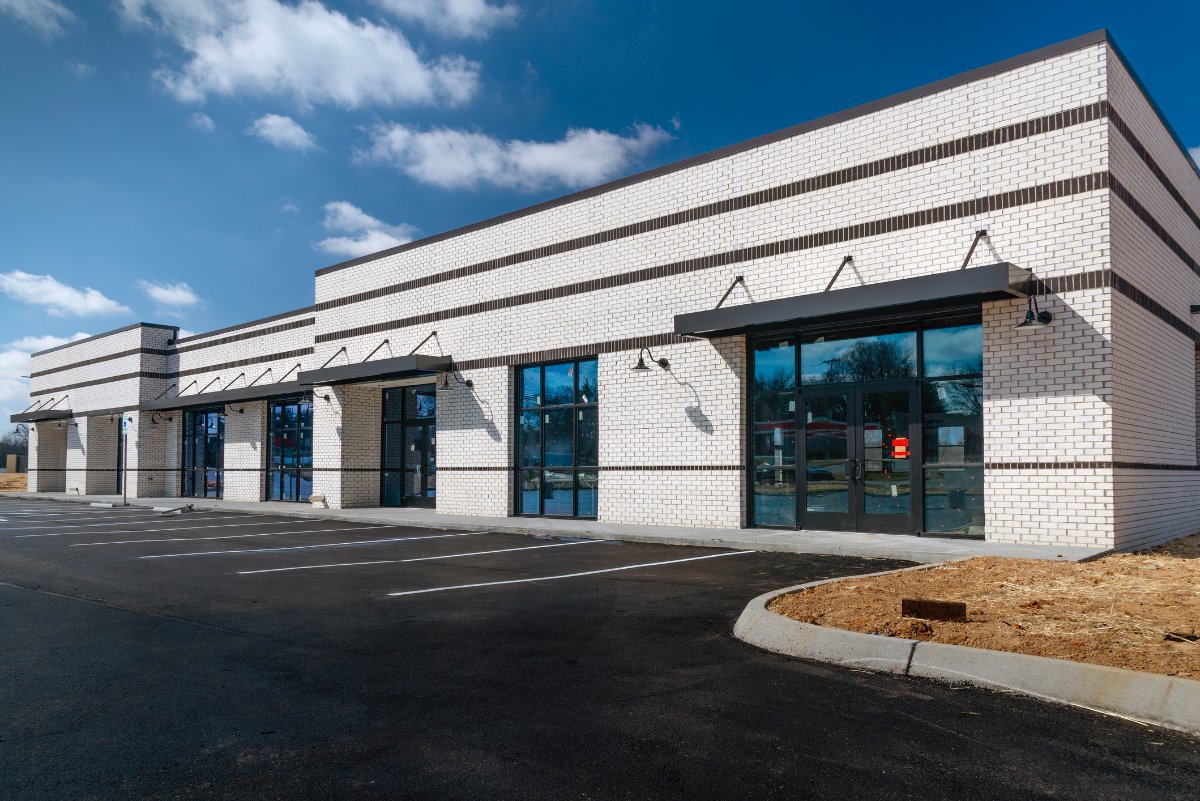
School boards and city councils in Ottawa County buy buildings through votes, bid documents and public meetings, and a contractor who is comfortable in that setting saves them time. We plan classrooms, gymnasiums, administration buildings, city halls, libraries and civic centers for Miami owners, with schedules written around the school calendar and the budget cycle.
Education is already a visible part of the local economy. The community college in town, Northeastern Oklahoma A&M, runs two-year programs, so campus buildings, labs, student services and parking all generate demand for careful, phased work near classes in session. Public owners that sit beside a campus often share its constraints on noise, access and move-in dates, and we plan for those from the first meeting.
We also support the public works side, such as maintenance buildings, equipment sheds and small utility structures that cities need and rarely discuss. We supervise and inspect the trade partners on every job, and we report to the owner in the format the owner's board or council expects.
Work at an occupied school or municipal campus changes the safety plan. We separate construction from students with fencing and dedicated entrances, schedule deliveries outside drop-off and pickup times and require trade partners to follow visitor sign-in and screening rules set by the owner.
Welding, cutting and demolition get hot-work permits, ventilation and clear notice to the building. Our superintendent walks the site daily and checks fences, gates, walkways and lighting at both ends of the school day, and each trade partner provides its own safety program and training records before mobilization. If an incident occurs, we document it, correct the cause and report it to the owner without delay.
A public budget is often set before design is finished, which makes early estimating valuable. We compare the program to the money available, mark the items that carry the most cost risk and propose alternates the board can accept or decline. Common drivers are structure, mechanical systems, security features, kitchens, athletic finishes and the site.
We keep contingency visible and explain how it is released, whether it returns to the owner or covers an approved change. Allowances for items not yet selected, such as flooring or playground equipment, are listed by name so nobody mistakes them for firm prices. Owners who use preconstruction estimating before the bid can adjust scope while changes are still inexpensive, instead of cutting quality after bids come back high.
When a project must be bid, we help the owner prepare clear packages, answer bidder questions through addenda and review bids for completeness. When the owner prefers a negotiated approach, we use construction management at risk to bring in trade input before drawings are final.
Either way, the owner sees the numbers. We provide schedules of values, monthly pay applications, change order logs and a short written report before each board or council meeting, so members can answer questions from the public with confidence.
Floodwater from the Neosho River has reached Miami more than two dozen times in the years after 1990. For a public owner that fact affects where a building goes, how high the floor sits and what equipment stays at ground level. We review flood maps early, raise mechanical and electrical gear where practical and design drainage so water has a path away from entrances.
Our stormwater drainage planning also covers parking lots, drop-off lanes and playfields, since a flat school site can hold water for days after a storm. The owner gets a plain description of the flood risk and a list of choices, with a cost for each.
Communication Solutions, LLC put out word on February 26, 2021 that its new Miami call center was expected to employ upwards of 250 people by the end of a five-year ramp-up, backed by capital above $500,000. New employment of that kind draws families, which can add students to classrooms, traffic to city streets and calls on water and sewer systems.
Two major road links serve the town, Interstate 44 and U.S. 69, and U.S. 59 is close by, so owners can draw staff and visitors from a wide area and trucks can reach a site without crossing small roads. We cite the announcement only as background on local demand and make no claim that we are connected to it. What it tells a builder is that a city or school board here may need to plan for growth while keeping to a tight budget. A phased addition or a flexible classroom wing can respond to that uncertainty better than a single large commitment.
Many public projects are renovations. Our phased construction approach breaks the work into zones that can be closed, finished and handed back in order, so a school can keep teaching and a city office can keep serving residents.
We pair that with education facility construction planning that places noisy tasks in summer, holidays and evenings, tests systems before students return and keeps a punch list moving. Miami owners can also compare options with Claremore and Bartlesville, where we can price similar work.
Scopes range from a single renovated wing to a full building. We cover site work, foundations, structure, envelope, roofing, mechanical, electrical, plumbing, fire protection, technology rough-in and interior finishes, and we coordinate each trade partner's schedule with the others.
At the end of the job we run commissioning, collect warranties and train maintenance staff on the equipment. The same sequence holds for city halls, libraries and fire stations, where a public counter or dispatch room must stay open. Owners can read more on our education and school building page and the government and public sector page, and we are glad to talk through your process.
Share your program, budget and approval timeline. We will return an estimate, a schedule and a list of items that need board or council decisions.
FAQ
Send the property, the building type and the schedule. We review the scope, the approvals and the trade packages and explain how the project would be sequenced.