
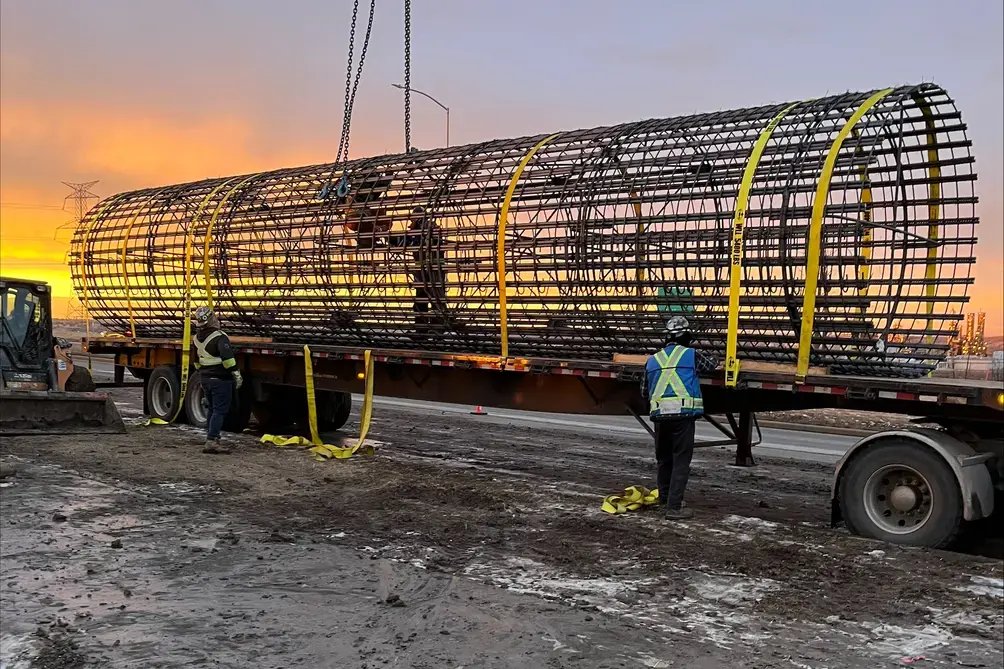
When shallow footings cannot carry the load, the foundation goes down. Drilled piers, also called drilled shafts, reach through weak or variable soil to firmer material below, and they handle the heavy column loads, uplift and overturning forces that spread footings cannot. We coordinate drilled pier work for Oklahoma owners whose buildings are too tall, too heavy or too wind-exposed for a conventional footing.
The method is straightforward in concept and demanding in execution. An auger or bucket drills a round hole to the depth the geotechnical engineer specifies, the crew sets a reinforcing cage, and concrete is placed from the bottom up so that water or loose soil is displaced rather than trapped. What separates a good shaft from a bad one is inspection: someone must confirm the bottom is clean, the depth is right and the bearing material matches the report.
We bring that discipline to every pier job, and we stay close to the driller, the engineer and the owner so that a field change is documented the same day it happens.
Piers earn their cost in three common situations. The first is soil that is too soft near the surface for a spread footing but firm at depth. The second is a structure with large uplift or lateral loads, such as tall canopies, signs, towers and big-span buildings. The third is a site where the water table or nearby utilities make wide excavations difficult, since a shaft takes less ground than a wide footing.
They are not always the answer. If good bearing material is near the surface, spread footings are usually cheaper and faster. We ask the structural engineer and the geotechnical consultant to compare both options early, and we can price each so that the owner sees the cost difference rather than trusting a rule of thumb. We have seen projects where moving a single building a few dozen feet changed the foundation system and the budget.
Aerospace and energy are two good examples. A Tulsa Regional Chamber report from October 22, 2026 says an engine services operator at Tulsa is expanding from 28 to 46 work bays, with more than 100 jobs expected by 2030. Big maintenance buildings of that kind, the core of any aircraft hangar program, pair tall clear heights with heavy overhead equipment, and their foundations are designed for that load.
Near Tulsa, a data center campus on unincorporated county land is described as reaching $3 billion over multiple phases, with up to four facilities, the scale we associate with a data center, totaling close to 1.2 million square feet and first-phase completion scheduled for summer 2027. In the northwest, federal energy data lists a wind farm in Woodward County at 198.6 MW nameplate capacity. Tall structures like these put large overturning forces on their bases, which is why drilled foundations are part of the conversation. Our Tulsa International aerospace and Woodward pages describe how we approach those two corners of the state.
A typical drilled pier scope includes layout, drilling to the specified depth, temporary casing where the soil will not stand open, cage fabrication and placement, concrete placement and the cleanup of spoil. We also coordinate dewatering and slurry methods when the ground requires them, and we make sure the pier tops are set to the right elevation so that grade beams and columns line up.
Related details deserve attention too. Anchor bolts for steel columns are set in templates before the concrete cures, and pier caps or grade beams tie the shafts into a single system. We keep a pier log for each shaft showing depth, diameter, bearing material, concrete volume and the inspector's sign-off. Owners get a record they can hand to a lender or to a future buyer without any gaps, and engineers get the information they need if they want to review the as-built foundation.
Drilling is specialized, and we are straightforward about it: we bring in qualified drilling firms with the right rigs for the soil and the depth, and we manage them as part of one schedule. What we manage most closely are the cage placement, the concrete scheduling, the layout and the integration with grade beams, footings and slab-on-grade work around the shafts.
That arrangement avoids the common problem of a driller who finishes the shafts before the formwork crew is ready or a concrete supplier who is not scheduled for the pour. Our superintendent holds the shaft sequence so the rig keeps moving and each hole is poured the day it is drilled, when the hole condition is at its best.
The main variables are shaft diameter, depth, the number of shafts, the presence of rock or groundwater, and whether casing is needed. Mobilization of the rig is a fixed cost, so a program of ten shafts has a higher per-shaft cost than a program of a hundred. Any change in depth after the borings are drilled usually adds money, and an honest estimate carries an allowance.
We recommend that owners ask for unit prices per foot of drilling and per cubic yard of extra concrete, so that depth changes are priced in advance. For a pylon sign or a canopy structure, shaft cost can be a surprisingly large share of the total, and for a retail owner planning a pad site, that is worth knowing early. Our work with retail chains has shown that repeating a standard pier detail across many sites keeps the cost predictable.
A pier program has to be finished before structural steel or tilt panels can begin, so its schedule is tied to the whole building. Drilling can often start as soon as the pad is rough graded, and we plan the layout so the rig works from one end to the other without moving back over finished shafts. Weather affects it less than it does shallow excavations, but a rain that fills open holes can still force a re-clean before the pour.
We coordinate delivery with the structural steel erection sequence, because the first column line often sets the order for the shafts. For buildings with large cranes or heavy overhead loads, we check shaft locations against the crane building design. And when the building is a hangar or a data hall, we make sure the foundation tolerances match the tolerances that the floor and the structure will later demand.
An open drilled shaft is a fall hazard and a trench hazard in one. We cover or barricade every open hole, keep spoil and equipment back from the edge and maintain signage so that no visitor or trade can wander into a work zone. Cage placement uses certified rigging and a spotter, and no one enters a shaft without an engineered procedure and a rescue plan.
Rig movement on a muddy site is another risk. We stabilize the working platform, check ground bearing for the rig and keep haul routes clear of the sensitive areas. Overhead and underground utilities are located before the first hole is started, because drilling into a line is a mistake that can hurt someone and delay a project for weeks.
Tell us about the structure, the soil report and the loads, and we will assemble a pier program, a unit price schedule and a sequence that fits your steel or slab date.
FAQ
Send the property, the building type and the schedule. We review the scope, the approvals and the trade packages and explain how the project would be sequenced.