
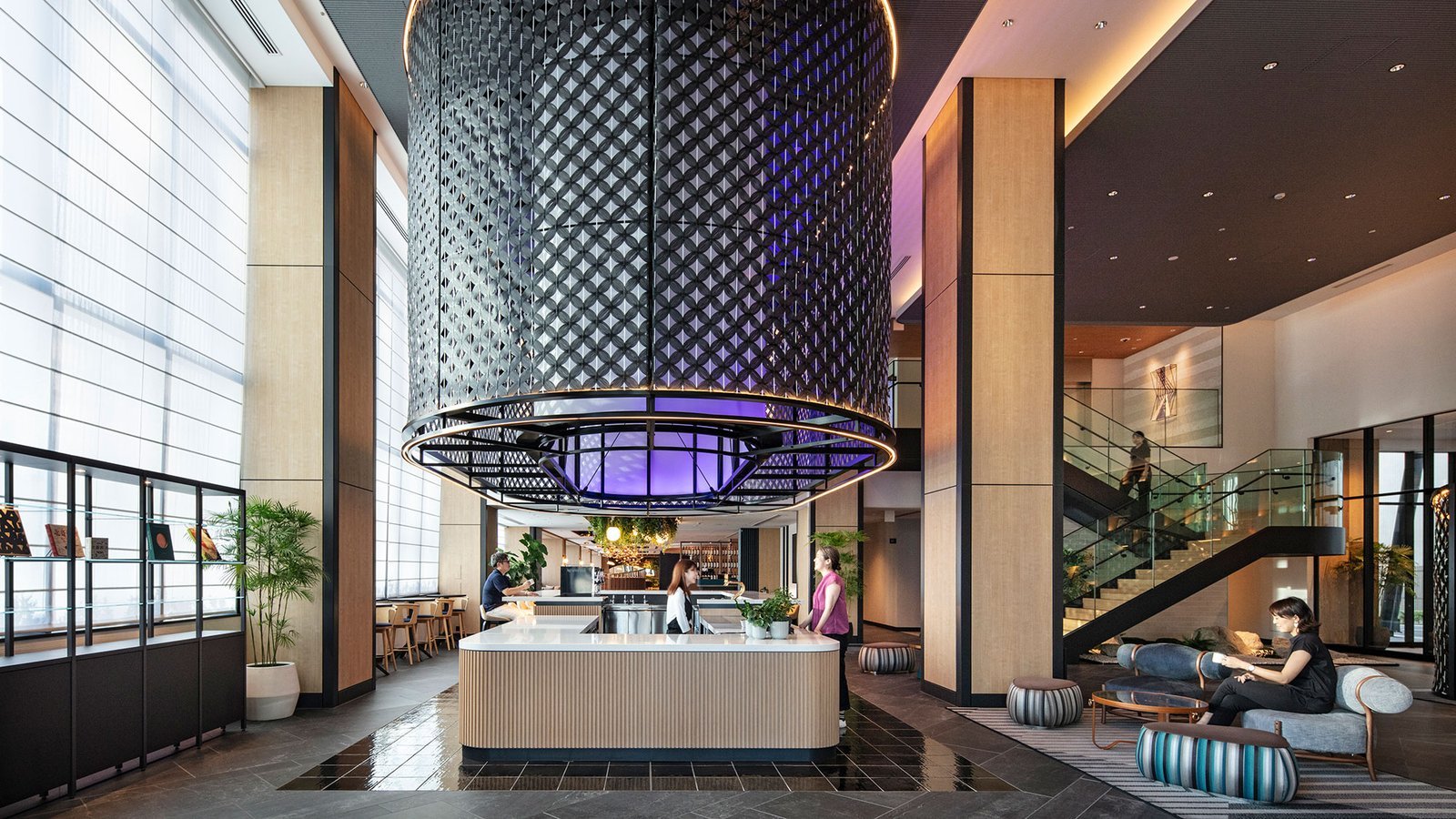
A refinery turnaround empties every hotel room within thirty miles of Ponca City. The Ponca City Development Authority reported that the plant's largest turnaround ever, in 2023, brought about 2,200 contractors to town over a two-month period, and those workers needed beds, parking for work trucks, early breakfasts and laundry. That is a hotel business that does not look like the leisure trade at all, and it explains why Oklahoma hotels are built for such a wide set of guests: oilfield and refinery crews, military families, university visitors, highway travelers and convention delegates.
The building follows the guest. A limited-service hotel by an interstate exit has a different design from an extended-stay suite hotel near a base, and both differ from a convention property in a downtown district. We have to know which one we are building before we price a single wall, because the room count, corridor layout, parking ratio and kitchen all change with the answer.
Here is what we think matters when an owner or franchisee builds a hotel in Oklahoma, from site choice to the day the keys are handed over.
Oklahoma's hotel demand is tied to specific institutions. Fort Sill is one of five locations used for Army Basic Combat Training and houses the Fires Center of Excellence, which means a steady flow of families visiting graduating soldiers around Fort Sill and Lawton. Vance Air Force Base trains more than 410 pilots a year, and Enid hotels serve their visitors and instructors. A hotel near a gate like these is built for repeat visitors with high peaks around graduation dates and quieter weeks between.
Urban projects have another character. The seven-mile stretch of the North Canadian River in Oklahoma City that was renamed the Oklahoma River in 2004 has locks forming small lakes for rowing and kayaking, and a hotel with a view of that water competes on setting, not just on price. Highway hotels often share an exit with a shopping center, and sharing access is worth planning. We build to the brand's prototype where there is one, and to the owner's own design where there is not, and we tell owners early when a prototype and a local site do not match.
Most Oklahoma limited-service and extended-stay hotels are three to five stories of wood frame over a slab, or light-gauge steel framing, with a masonry or stucco exterior. Wood frame is economical and fast, but it brings fire-separation requirements and sprinkler design that need close attention. Each guest room is built to a repeated plan, so the quality of the construction comes from consistency: the fortieth room should be identical to the first. We build a mock-up room early so owner, brand inspector and crew can agree on finishes and details before the building repeats them a hundred times.
Public spaces and back-of-house are where hotels differ most. The lobby, breakfast area, fitness room, laundry and loading area are all constrained by brand standards, and the mechanical systems for pools and laundry are some of the more complex. Our hospitality construction practice coordinates these systems with the structure so that pool rooms are dehumidified correctly and laundry exhaust does not end up where a guest window is.
The dominant cost in a hotel is the guest room, and a small saving per room repeats across the whole building. Furniture, fixtures and equipment are bought by the owner or franchisor, often on a separate schedule, and we coordinate delivery with the completion of each floor. The second large cost is the building envelope and the mechanical system: each room has its own heating and cooling unit, and each bathroom has its own plumbing stack. Repetition lets us price accurately and schedule trades floor by floor.
Brand programs add requirements that can surprise an owner. Franchisors set minimum finishes, signage and amenities, and may require specific vendors. We review the franchise agreement and property improvement plan before pricing, and we flag any item that is unusual for Oklahoma. For owners adding a second or third property, a multi-site rollout approach lets us reuse the same plans and subcontractors across sites.
Old hotels are often better candidates for conversion than for demolition. A tired motel on a highway frontage road may be reworked into a modern limited-service property, or an older downtown building may be turned into a boutique hotel. That is adaptive reuse, and it comes with surprises: asbestos, older plumbing, odd structure and accessibility upgrades. We survey before we price and carry a contingency for what is behind the walls.
Conversions can also be faster than ground-up construction, because the shell is already there. They are not always cheaper, because new life-safety systems, elevators and accessible routes can cost as much as new floors. We give an owner a side-by-side comparison of renovation and new construction, with clear assumptions, so the decision rests on numbers rather than on nostalgia for the old building.
Hotel schedules are set by financing and by the brand's opening date. A franchisee typically has a deadline in the franchise agreement, and late opening can bring fees or loss of the territory. We build the schedule from the opening date backward, putting weather days into the foundation and framing phase, because spring storms are a regular feature of Oklahoma work. The National Weather Service counts 4,518 tornadoes in the state between 1950 and today, with May as the peak month. A wood frame under construction in May needs a plan for securing the building and protecting material.
Opening also depends on inspections. Fire marshals, health departments for pool and breakfast areas, and the building department all sign off, and each needs a complete, tested system. We schedule life-safety testing early in the finish phase rather than at the end. Hotels owned by hospitality groups often have a standard punch list, and we use it as our own. A hotel next to a mixed-use building may also share parking and utilities, which we coordinate with the city.
Send the brand, the room count and the site. We will return a budget range, a schedule backward from your opening date and a list of franchise requirements worth reviewing.
FAQ
Send the property, the building type and the schedule. We review the scope, the approvals and the trade packages and explain how the project would be sequenced.