
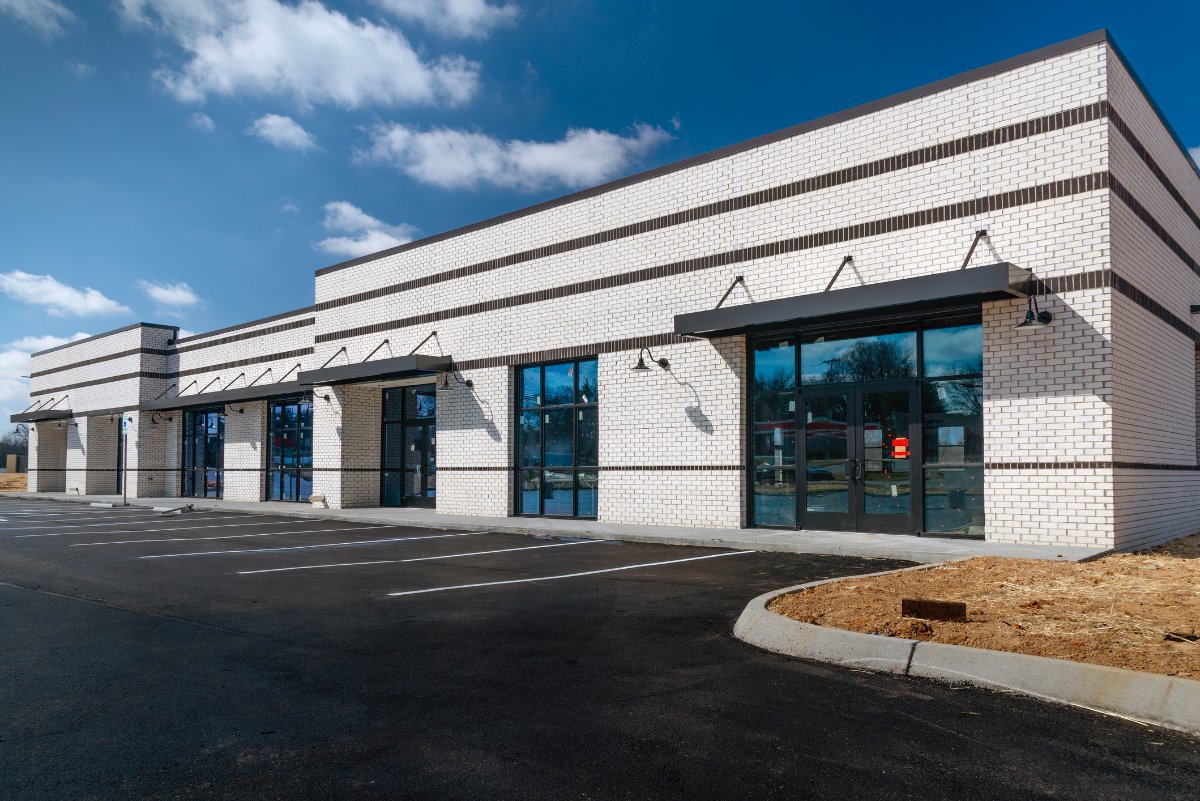
City halls, public works yards, fire stations and utility buildings have to work every day of the year, so the cities and authorities that order them want a builder who thinks about maintenance, durability and long service from the first sketch. We construct public works and city facilities in Choctaw with that mindset, from the slab and the drainage to the doors that fire trucks and dump trucks need.
Choctaw has strong reasons to plan ahead. ODOT is reshaping the I-40 and Choctaw Road interchange between mile markers 165 and 167, converting the cloverleaf, only partial now, to a full diamond, giving the interstate six lanes with auxiliary lanes over the run from I-240 out to Peebly, and giving Choctaw Road four lanes between S.E. 78th and 71st. Any city building near that corridor will see traffic, detours and utility relocations during construction, and the finished project will sit on a much busier road network.
Public work also has a second audience. Church fellowship halls, recreation centers and community buildings share many details with city facilities, and we handle them with the same procurement discipline.
A public project can be late because of a funding date, a board agenda, an ODOT detour or a long equipment lead time, so our schedules show each of these. We map decision dates, procurement windows, permit reviews and construction durations on one calendar and show the owner which dates carry risk.
When road work changes access to a site, we adjust truck routes, delivery hours and staging. Coordination with state project teams is part of preconstruction, not an afterthought. We also ask the owner to identify any council meeting, bond sale or grant deadline that sets a hard date, and we work backward from it so procurement, submittals and equipment orders start on time.
City facilities follow public procurement rules, and records must be complete. We keep submittals, change orders, pay applications and inspection reports organized in a form that auditors and councils can read.
The local building department reviews the permit, and some sites touch state or county rights of way as well. We identify each reviewer during preconstruction, submit coordinated packages and track comments to completion. Fire and emergency buildings often have additional requirements for apparatus doors, generators and communications, so we confirm those with the design team early.
Public sites are often next to roads, parks or homes. We fence the work, control access, assign flaggers for deliveries and keep walkways separate from construction traffic. At the end of each shift, trenches are covered or barricaded, and equipment is parked in a secure area.
Each trade partner submits a safety plan for its scope, and we supervise and inspect compliance on site. We keep the safety record available for the owner and, on request, for the city's risk manager.
Public works buildings usually cost more per square foot than people expect because they need tall bays, heavy slabs, durable finishes and backup power. Yards require paving, lighting, fencing and stormwater control, and those items can match or exceed the building cost.
We show the building, site, utilities and equipment as separate lines so a council can choose where to invest. Alternates for extra bays, covered storage or later expansion keep options open. Fuel islands, wash racks and salt or material storage are priced on their own so the council can phase them if funds are short, and we note which items are cheapest to include during the first pour and which can wait. For help with utilities and drainage, see our site development and utilities work.
Choctaw spreads over about 27 square miles of Cross Timbers country at 1,155 feet, east of Oklahoma City by a drive of around 10 miles. Rolling ground and mature trees give the area a different character from the flat plains west of the metro, and they affect grading and drainage.
Growth in the eastern metro puts pressure on roads, water, sewer and public safety, and cities respond with new facilities. Owners comparing needs with neighbors may study Midwest City and Del City, both of which have their own public works programs.
Cross Timbers land often has clay soils, tree roots and slopes that complicate foundations and drainage. We recommend a geotechnical report early and design site grading so water leaves the building and the yard without flooding neighbors.
Where trees must be removed, we coordinate with the city and the design team, and we protect those that stay. Stormwater controls and erosion measures are installed before major earthwork starts. Our stormwater and drainage experience helps owners plan these systems.
Alongside city facilities, we build government and municipal buildings such as offices, courts, training rooms and storage. Community buildings include recreation centers, senior centers and churches with fellowship halls, kitchens and classrooms.
Career training happens locally at the Eastern Oklahoma County Technology Center, and the Choctaw-Nicoma Park School District serves most of the community. School and training buildings share design features with civic space, including accessible restrooms, secure entries and flexible rooms. Churches and recreation buildings add large assembly areas, commercial kitchens and sound control, and we coordinate those systems with the design team before bidding so the finished room works for services, sports and community events.
Public owners can choose how to buy a project. Municipal government construction may be delivered through competitive bid or a construction manager, and our government and public sector experience covers both. We help owners compare the options and prepare documents that match state and local rules.
After the building is complete, we help with testing, training and warranty follow-up so operations staff understand the systems they inherit. We hand over a binder of manuals, product data and contact information, and we return during the first year to check on items that only show up under real use.
Tell us what the building must do, where the site is and what the funding calendar looks like. We will return a scope outline, a budget range and a schedule that accounts for the nearby highway work.
FAQ
Send the property, the building type and the schedule. We review the scope, the approvals and the trade packages and explain how the project would be sequenced.