
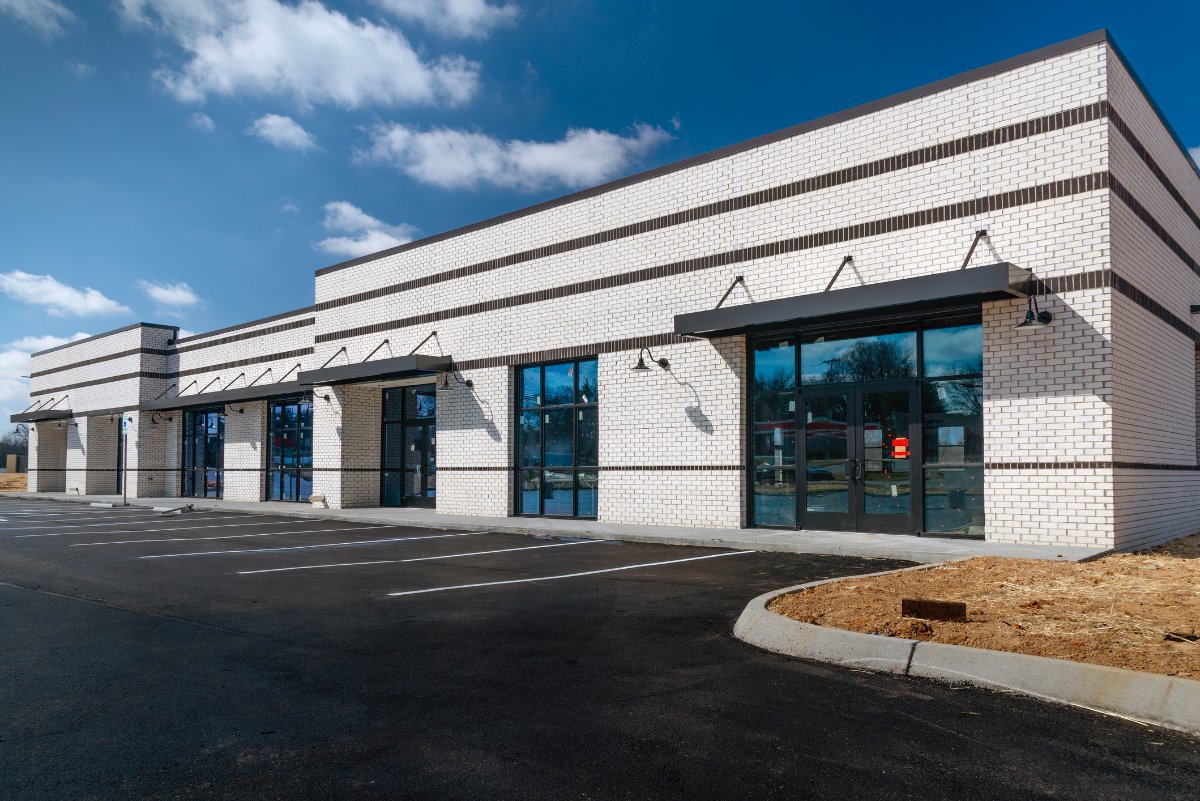
Eight million dollars of public money headed to the Altus Industrial Air Park, in the form of $4 million from federal ARPA funds and $4 million from the state's PREP fund, according to an October 2022 report. Small-city buildings in Oklahoma are rarely paid for by one source. A fire station might use a bond, a city hall renovation a sales tax, a water plant a state loan and an airpark hangar a federal grant, and each comes with its own rules about bidding, wage rates, reporting and deadlines. The contractor's first job is to read the funding stack, not the plans.
Municipal and government work is where that discipline shows. These buildings serve residents directly: libraries, courthouses, police and fire stations, public works yards, community centers, airport terminals and civic offices. They are paid for by taxpayers, open to scrutiny and expected to last for decades. They are also built under public bidding laws that govern how contractors are selected.
We build for cities, counties, authorities and tribal governments across the state, and we try to make the process understandable for the elected board or council that will vote on the contract. Here is how that work goes.
Grant-funded work is a growing share of Oklahoma public construction. Duncan's Eastland, Northland and South industrial parks share $1.4 million in federal ARPA funds and $1 million in state PREP money, per an October 2022 report. In Woodward, a $2 million Economic Development Administration grant, matched by more than $1.2 million in local investment, supports improvements at the Woodward Industrial Airpark and a planned 124,000-square-foot industrial facility. Each grant has milestones and a compliance file, and a contractor who does not keep records the way the funder expects can put the grant at risk.
We assist by tracking quantities, payrolls and change orders in a format the grant administrator can use. In Duncan and Woodward, the work is often site and utility improvement ahead of a building, so the first year may not look like a building at all. A city that understands the sequence can explain the progress to the public.
The Public Competitive Bidding Act of 1974 applies to most Oklahoma public construction. Contracts over $100,000 must be awarded to the lowest responsible bidder by open sealed bid, with bid security of 5% of the bid as a certified check, cashier's check, bid bond or irrevocable letter of credit. SB 1014 amended the statute effective November 1, 2025, and it is scheduled to be superseded effective November 1, 2027. Construction management trade contracts and subcontracts over $50,000 follow a parallel rule. For smaller work, written bids or competitive quotes are used, and a local bidder may receive a preference of not more than 5%.
Accessibility is also written into law: plans for public buildings must provide facilities for people with disabilities following the codes adopted by the State Fire Marshal. We review the drawings for these provisions before bid, because a public project that must be corrected after award takes time and a change order. For city staff, our municipal construction services include bid-phase support such as pre-bid walk-throughs and clarification.
Code editions vary from city to city. The City of Sapulpa's building inspector published a notice listing the International Building Code, the International Residential Code and the National Electrical Code as adopted by the state with local modifications. Each city decides when to adopt newer codes, and each project follows the codes the local authority adopts and enforces. A city hall or police station designed under the wrong edition can face rework, so we ask the building official to confirm in writing.
Public buildings also have to look beyond the code. Essential facilities like fire stations and emergency operations centers are generally designed for higher wind and seismic performance, and generator capacity and fuel storage matter more. In tornado country, a city may also want a community safe room. We help councils compare these options by giving a price for each as an alternate in the bid so the board can decide with real numbers.
Many municipal projects involve infrastructure as well as buildings. In Guymon, the city leased rights to 640 acres of water for its Mesa Water Project through 2080, with first water expected in October 2026, and in Stroud the Oklahoma Turnpike Authority approved a $39.2 million contract in September 2024 for the second phase of a service plaza project that widens I-44 to six lanes west of town. Projects like these cross jurisdictions: city, county, state and authority. A contractor must know who owns each right-of-way and who signs off.
For work that combines buildings and utilities, the trade partners for site development and utilities handle water, sewer and storm lines along with the building. Coordination with airport hangar and other airside facilities needs a separate level of care, because airport sponsors have their own height, safety and operations rules.
Public schedules are driven by funding and by public meetings. A council that approves a contract in one month expects visible progress in the next, and an elected board may want to see a ribbon-cutting before an election. We give owners a schedule that includes the realistic pauses: submittal approvals, utility coordination, weather and inspections. We also provide short, plain monthly updates suitable for a council packet.
Closeout is as important as construction. Public agencies need warranties, as-built drawings, operations manuals and training in a form they can store and find in ten years. Our process includes a closeout binder and a walk-through with the staff who will run the building, whether that is a recreation center or the public sector facility down the street from a school. A good closeout keeps a city out of arguments with its own building later. When a city is also building a school or other public facility, we sequence inspections so one set of reviewers is not asked for two sign-offs on the same day.
Share the funding sources, the project scope and the dates your council expects. We will explain the bidding steps and set out a schedule and budget your board can follow.
FAQ
Send the property, the building type and the schedule. We review the scope, the approvals and the trade packages and explain how the project would be sequenced.